
Why this pot matters for your bread
A heavy, tight-lidded pot is the single most important tool for baking sourdough. It creates a miniature convection oven that traps steam, allowing the dough to expand fully before the crust sets. Without this environment, the bread lacks "oven spring" and ends up dense. The same principle applies to stews: the thick walls distribute heat evenly, preventing hot spots that can burn delicate ingredients or leave raw edges in tough cuts of meat.
The physics are simple but demanding. Cast iron retains heat significantly longer than stainless steel or aluminum. This thermal mass ensures the temperature inside the pot remains stable even when you open the lid to check progress. Tests by Serious Eats and Wirecutter consistently show that heavier pots produce superior crusts and more tender results because they minimize temperature fluctuations.
When evaluating the best dutch oven, look for three things: weight, lid fit, and material. A lid that seals tightly is non-negotiable; if steam escapes, your bread won't rise properly. Cast iron offers the best heat retention, while enameled cast iron provides easier maintenance. Both materials excel, but the pot must be heavy enough to act as a heat sink. Thin pots cool down too quickly, leading to uneven cooking and poor texture in both bread and stews.
Cast Iron vs. Enameled Cast Iron
The choice between raw and enameled cast iron comes down to how you want to manage heat and acidity. Raw cast iron is porous and reactive, while enameled cast iron features a glass-like coating that seals the metal. This structural difference dictates which pot handles sourdough baking and which manages acidic tomato stews.
Raw Cast Iron: The Non-Stick Specialist
Raw cast iron develops a polymerized seasoning layer over time. This layer creates a natural non-stick surface that improves with use. For sourdough, this means you can often bake directly on the surface or use minimal oil without sticking. The material conducts heat efficiently once hot, creating a crisp crust on bread loaves.
However, raw iron reacts with acidic ingredients. Cooking tomato-based stews or wine reductions in unseasoned cast iron can strip the seasoning and impart a metallic taste to the food. You must hand-wash and dry these pots immediately to prevent rust, adding a maintenance step to your cooking routine.
Enameled Cast Iron: The Acid-Proof Workhorse
Enameled cast iron eliminates the reactivity issue. The glass coating prevents acidic foods from interacting with the iron base, making it ideal for long-simmered stews, braises, and sauces. You can cook tomato-heavy dishes for hours without worrying about flavor contamination or seasoning damage.
The trade-off is weight and price. Enameled pots are often heavier and more expensive than their raw counterparts. The enamel can chip if struck with metal utensils, requiring careful handling. For bread baking, the smooth enamel surface doesn't provide the same non-stick benefits as seasoned iron, often requiring parchment paper to ensure easy release.
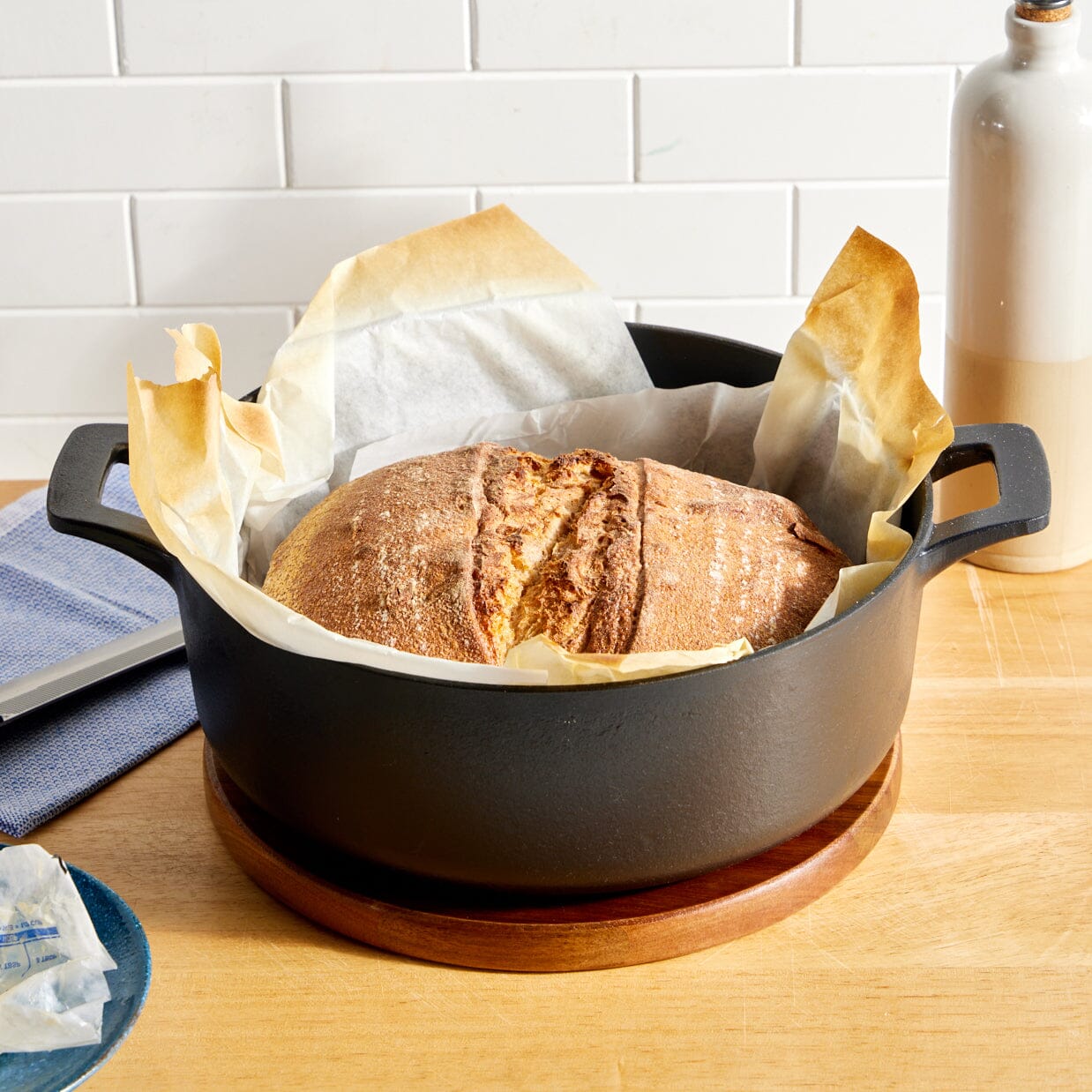
Comparison: Raw vs. Enameled
Use this table to decide which type fits your primary cooking needs. Raw iron excels in crust development and non-stick performance, while enameled iron wins on versatility and ease of cleaning.
| Feature | Raw Cast Iron | Enameled Cast Iron |
|---|---|---|
| Heat Retention | Excellent | Excellent |
| Non-Stick Surface | Improves with seasoning | Smooth (may stick without oil) |
| Acid Resistance | Reactive (strip seasoning) | Resistant (safe for tomatoes) |
| Maintenance | Dry immediately, re-season | Dishwasher safe (usually) |
| Best For | Sourdough, searing | Stews, braises, sauces |
Top picks for bread and braises
The best dutch oven for sourdough and stews depends on whether you prioritize thermal mass or enamel durability. Le Creuset and Staub dominate the premium segment because their heavy lids and thick walls create a self-basting environment. Lodge offers the closest performance-to-price ratio for budget-conscious bakers.
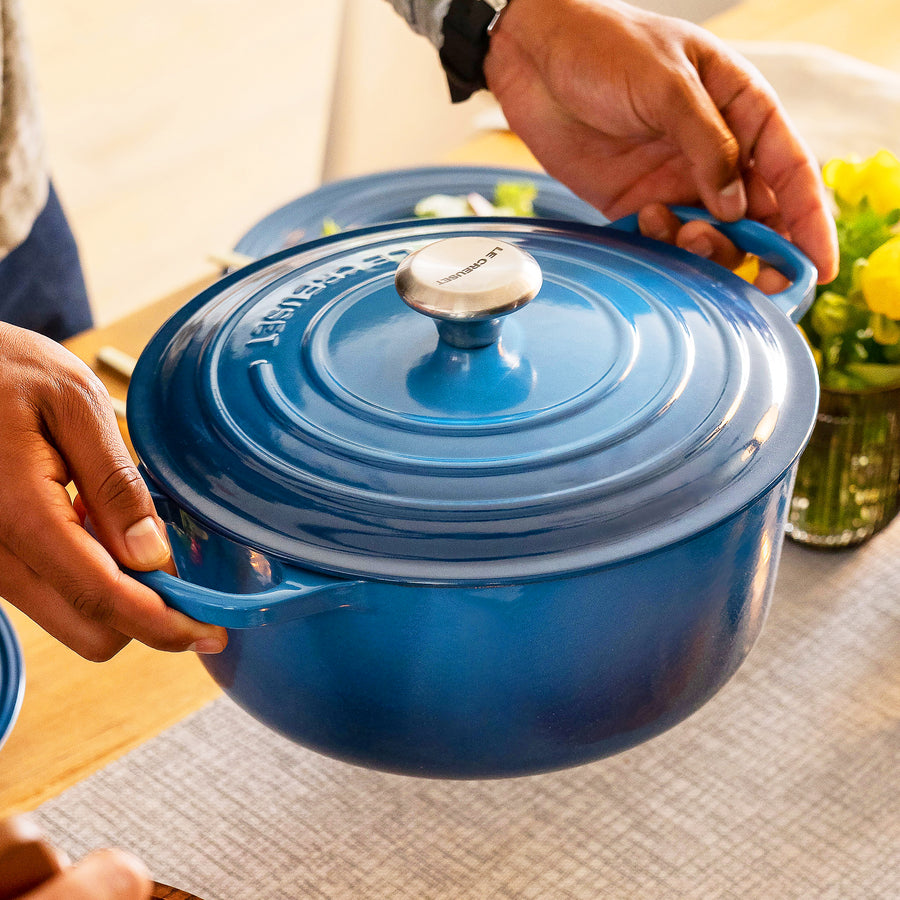
Le Creuset Signature Round Dutch Oven
Le Creuset remains the industry benchmark for heat retention. Its thick enamel coating resists chipping better than most competitors, making it suitable for high-heat searing and long braises. The tight-fitting lid traps steam, which is critical for achieving the open crumb structure in sourdough. While expensive, the cast iron thickness ensures even heating without hot spots.
Staub Cocotte
Staub uses a matte black enamel interior that requires no seasoning and develops a natural patina over time. The concave lid spikes on the underside act as internal rain, dripping condensation back onto the food. This design makes it slightly superior to Le Creuset for braising meats, though it performs equally well for baking bread. The heavy lid provides excellent pressure during the initial oven spring.
Lodge Essential Enamel
Lodge delivers 80% of the performance of premium brands at a fraction of the cost. The enamel coating is thinner and more prone to chipping if dropped, but the cast iron core provides robust heat retention. It is an excellent entry point for sourdough bakers who need a reliable vessel without the premium price tag. The lid fit is slightly looser, which may require a longer preheat to build sufficient steam pressure.
The Classic Sourdough Method
Baking sourdough in a Dutch oven relies on two physical principles: thermal mass and steam containment. Cast iron and enameled cast iron both provide the heavy thermal mass needed to maintain a stable temperature during the initial bake, while the tight-fitting lid traps moisture to allow the dough to expand fully before the crust sets. This "oven spring" is critical for achieving an open crumb structure.
The process begins with a fully proofed loaf, ideally one that has undergone a cold ferment in the refrigerator to develop complex flavors. Preheating the pot is non-negotiable; a cold pot will shock the dough, causing it to spread rather than rise. Once the dough is in the hot vessel, the lid stays on for the first half of the bake to trap steam. Removing the lid later allows the Maillard reaction to occur, creating the signature dark, crackly crust.
Troubleshooting crust quality often comes down to timing and heat management. If the crust is too pale, extend the uncovered baking time by five to ten minutes. If it burns too quickly, lower the oven temperature by 25°F (15°C) or tent the loaf with foil during the final stage. Always let the bread cool completely on a wire rack before slicing; cutting into hot bread releases steam too quickly, resulting in a gummy interior.
Is a premium dutch oven worth it?
The price gap between a budget Lodge and a premium Le Creuset or Staub can feel steep, but the difference often comes down to manufacturing precision rather than raw material. Premium brands invest in tighter tolerances for their lids and enamel thickness, which directly impacts heat physics during long cooks.
In testing by Serious Eats and Wirecutter, the distinction is most visible in sourdough baking. A heavier, better-sealing lid traps steam more effectively, creating the consistent crust expansion needed for an open crumb. Budget pots often have lighter lids that let steam escape, resulting in a denser loaf. For stews, the difference is less about cooking speed and more about enamel durability; cheaper coatings are more prone to chipping, which can expose the cast iron to acidic ingredients over time.
If you bake sourdough weekly or make rich, acidic tomato-based stews often, the investment in a premium dutch oven pays off in longevity and consistent results. For occasional use, a mid-range or budget option is entirely sufficient.
Dutch oven care and FAQ
Cast iron’s thermal mass makes it forgiving for sourdough crust development, but that same density requires specific maintenance. Enamel adds a glass-like barrier that simplifies cleaning but introduces fragility. Understanding how these materials behave under thermal stress and acidic conditions extends the life of your cookware significantly.
Pre-bake checklist
-
Pot preheated fully in the oven
-
Dough scored and ready to drop
-
Lid and handles secured with mitts
Maintenance and longevity
Enameled cast iron resists acidic reactions, making it ideal for tomato-based stews and long-simmered braises. However, the enamel coating can chip if subjected to sudden temperature changes or abrasive scrubbing. Avoid metal utensils and thermal shock by letting the pot cool before washing. Serious Eats testing shows that high-quality enamel holds up well to daily use if handled with care.
Bare cast iron develops a polymerized seasoning layer that improves with use. This layer provides a natural non-stick surface and rust protection. Clean with hot water and a stiff brush; avoid soap if possible to preserve the seasoning. Dry immediately and apply a thin layer of oil to maintain the barrier. Wirecutter notes that while bare iron requires more effort, it is virtually indestructible and improves with age.
Common: what to check next
Proper care ensures your Dutch oven remains a reliable tool for both crusty sourdough loaves and rich, slow-cooked stews. Treat it according to its material properties, and it will last for decades.
No comments yet. Be the first to share your thoughts!