
Our top picks at a glance
Finding the best dutch oven means balancing heat retention, durability, and budget. We tested dozens of models to identify the clear winners for different cooking styles. Whether you need professional-grade heat distribution or a durable everyday workhorse, these are the top contenders.
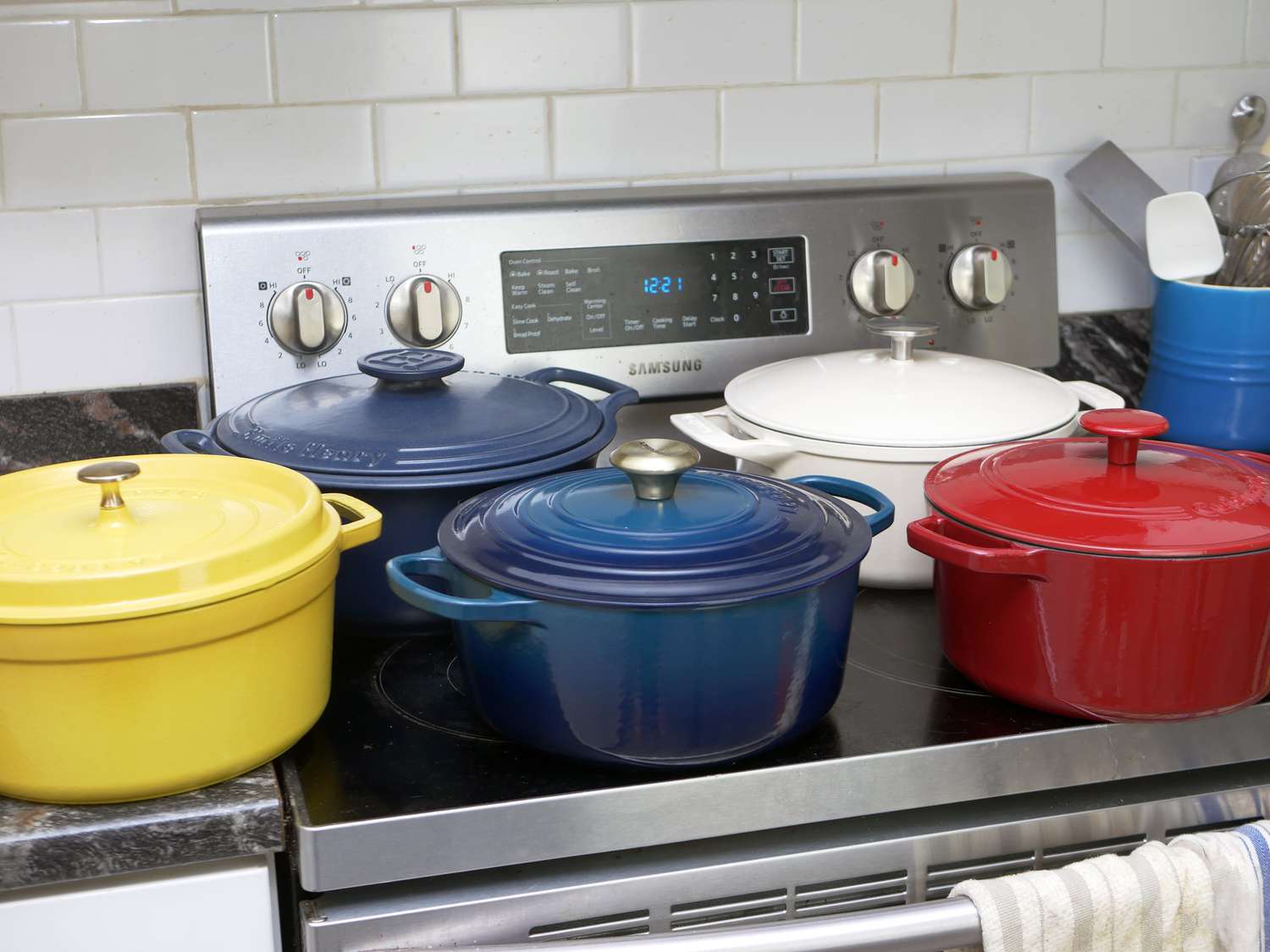
Le Creuset Signature Round Dutch Oven
Best for: Overall performance and longevity
Le Creuset remains the gold standard for enameled cast iron. Its 5.5-quart round model consistently tops our tests for even heating and superior heat retention. The enamel coating is highly durable, resisting chips and stains better than most competitors. While the price is steep, the construction quality ensures it will last for decades, making it the best dutch oven for serious home cooks who want professional results.
Lodge 6-Quart Essential Enamel
Best for: Budget-conscious buyers
Lodge offers the most accessible entry point into quality enameled cast iron. The 6-quart size is versatile enough for most family meals, from roasting chickens to brewing soups. While the enamel finish is slightly less refined than Le Creuset’s, it performs admirably in daily use. This model provides 90% of the performance of premium brands at a fraction of the cost, making it the best choice for everyday cooking.
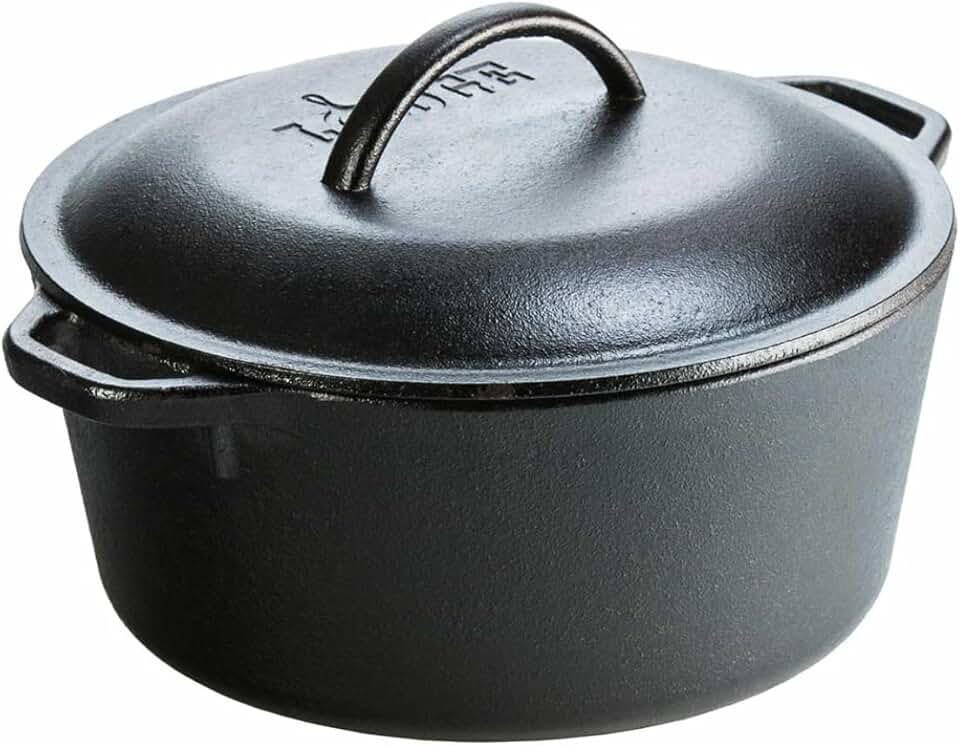
Staub Cocotte
Best for: Braising and moisture retention
Staub’s unique design features a matte black enamel interior and tight-fitting lids with self-basting spikes. These spikes condense moisture and drip it back onto the food, making it exceptional for braising meats and baking bread. The heavy lid ensures minimal evaporation, keeping stews and roasts incredibly tender. If your cooking style relies heavily on moist-heat methods, Staub is the superior choice.


As an Amazon Associate, we may earn from qualifying purchases.
Enameled vs raw cast iron choices that change the plan
Choosing between enameled and raw cast iron comes down to how much maintenance you want to perform. Both materials offer excellent heat retention, but their surface properties dictate entirely different cooking experiences and care routines.
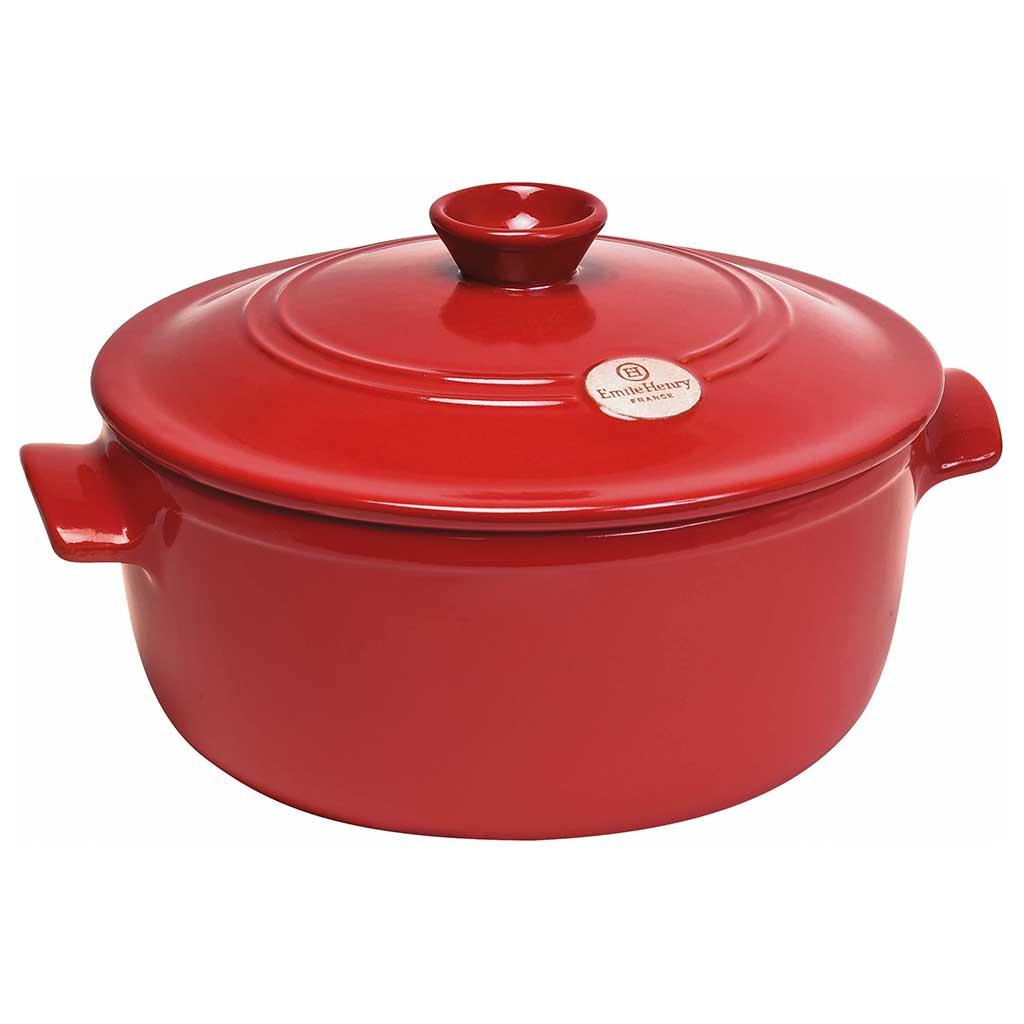
Raw cast iron is uncoated, porous metal that requires seasoning to build a nonstick surface. It excels at searing and developing a patina over time, but it reacts with acidic ingredients like tomatoes or wine, which can strip the seasoning and impart a metallic taste. It also requires hand washing, drying, and oiling to prevent rust.
Enameled cast iron features a glass-like coating fused to the metal. This barrier makes it non-reactive, allowing you to simmer acidic sauces without worry. It is generally easier to clean and does not require seasoning, making it the preferred choice for delicate stews and braises. However, the enamel can chip if struck against hard surfaces or subjected to extreme thermal shock.
The table below summarizes the core differences to help you decide which type fits your cooking style.
| Feature | Enameled Cast Iron | Raw Cast Iron |
|---|---|---|
| Acid Resistance | Yes | No |
| Seasoning Required | No | Yes |
| Nonstick Surface | Moderate | High (with use) |
| Durability | Chips if struck | Nearly indestructible |
| Weight | Heavy | Heavy |
| Best For | Braising, soups, sauces | Searing, frying, baking |
Le Creuset vs Staub: the premium duel
When searching for the best dutch oven, the choice usually narrows to two heavyweights: Le Creuset and Staub. Both brands dominate the enameled cast iron market, offering superior heat retention and durability that cheap alternatives simply cannot match. While they look different, they perform similarly in the oven and on the stovetop, making the decision a matter of specific cooking habits rather than general quality.
Le Creuset is the industry standard for a reason. As noted by Serious Eats and Wirecutter, the Le Creuset Signature Enameled Cast-Iron 5½-Quart Round French Oven consistently tops our tests for searing and stewing. Its smooth, light-colored interior makes it easy to monitor browning and sauce reduction, which is critical for dishes like coq au vin or beef bourguignon. The exterior glaze is also available in a wider array of colors, allowing it to double as a serving vessel that fits seamlessly into a table setting.
Staub takes a different approach with its matte black, sandblasted interior. This textured surface is designed to promote better browning and reduce evaporation, making it ideal for braising tough cuts of meat. Staub pots also feature self-basting spikes on the tight-fitting lid, which circulate moisture back into the food. While the dark interior can make it harder to judge the color of sauces, many chefs prefer the hands-off nature of Staub’s braising performance.
The visual difference is stark, but the functional gap is smaller than the price tag suggests. Le Creuset offers clarity and tradition; Staub offers efficiency and modern braising tech. If you frequently prepare dishes where visual monitoring of the food is key, Le Creuset is the safer bet. If you spend more time braising meats and prefer a "set it and forget it" approach, Staub’s design works harder for you.
Budget Picks That Actually Perform
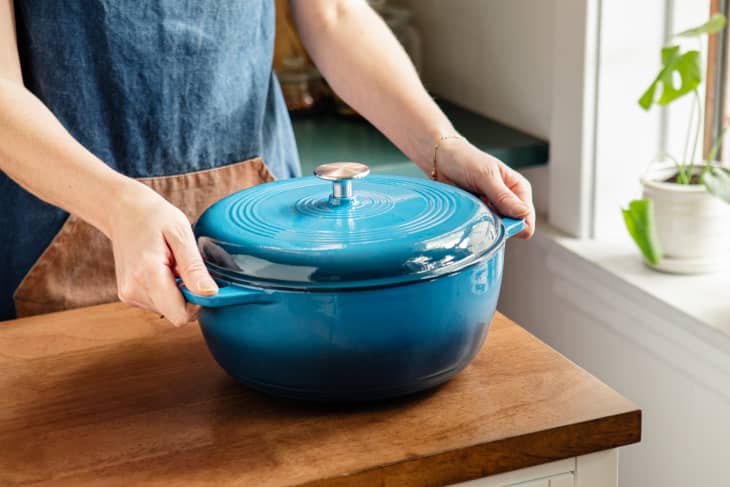
The best dutch oven isn’t always the most expensive one. While premium brands like Le Creuset and Staub set the standard for finish and longevity, budget-friendly options deliver 90% of the performance for half the price. For most home cooks, the savings are better spent on high-quality ingredients rather than a luxury finish.
Lodge dominates this category. The Lodge 6-Quart Essential Enamel Cast Iron Dutch Oven is a frequent top pick from testers at Serious Eats and Wirecutter. It features a thick enamel coating that resists chipping better than many competitors in its price range and a heavy lid that seals in moisture effectively for braising and bread baking. It performs just as well as pots costing three times as much when it comes to heat retention and even cooking.
Other value options include the Cuisinart Chef’s Classic and various Target brand enamel cast iron pots. These alternatives may lack the refined aesthetic of premium brands, but they handle searing, stewing, and roasting with competence. The primary trade-off is usually in the weight and the smoothness of the enamel finish, but for everyday cooking, the difference is negligible.
If you are looking for the best dutch oven that balances cost and capability, start with Lodge. It provides the core benefits of cast iron—heavy heat retention and durability—without the premium markup. You can always upgrade to a specialty brand later if you prioritize aesthetics over function.
Is an expensive Dutch oven worth it?
The price gap between budget and premium Dutch ovens often feels arbitrary, but the difference usually comes down to material consistency and manufacturing precision. When you pay more, you are paying for thicker cast iron walls that retain heat longer and enamel coatings that resist chipping during daily use.
Cheaper models often suffer from thin walls that create hot spots, leading to uneven cooking. Their enamel layers are frequently thinner and more prone to cracking if subjected to thermal shock or abrasive cleaning. In contrast, high-end brands like Le Creuset or Staub use heavier iron and multi-layer enamel that withstands years of oven-to-stove transitions without degrading.
Handle ergonomics and lid fit are also where the extra cost shows. A well-designed lid seals tightly, trapping moisture for better braising results. Premium handles stay cooler longer and offer a secure grip, whereas budget handles can become uncomfortably hot or feel flimsy. If you plan to use your Dutch oven daily for soups, stews, and bread baking, the durability and performance of a premium pot justify the investment.
However, for occasional use or baking occasional loaves of bread, a mid-range enameled cast iron pot often provides sufficient performance. The best Dutch oven for you depends on how often you cook with it and whether you value long-term durability over upfront savings.
How to choose your size
Picking the right size is the most common mistake when buying a new dutch oven. Most home cooks end up with a pot that is either too small for family meals or too large for everyday use. Testing data from Serious Eats and Wirecutter confirms that the 5.5-quart and 7-quart models are the most versatile options for typical households.
A 5.5-quart dutch oven is the ideal starting point for couples or small families. It comfortably holds 2 to 4 servings, making it perfect for weeknight stews, braises, and roasting a small chicken. If you frequently bake bread for two, this size also provides the right amount of headspace for proper oven spring without wasting energy.
For families of four or more, or for those who meal-prep, a 7-quart model is the better choice. This size accommodates larger cuts of meat and bigger batches of soup or chili. It is also the standard size for baking large loaves of sourdough. If you entertain often or want one pot to handle almost any recipe, the 7-quart offers the necessary capacity without being as cumbersome as an 8-quart.
No comments yet. Be the first to share your thoughts!