
How we picked the best dutch oven
We tested eight enameled cast-iron Dutch ovens in our kitchen lab to find the models that perform best under pressure. Our evaluation focused on three core areas: heat retention, lid fit, and enamel durability. We wanted to identify which pots could handle high-heat searing without warping and which lids could trap enough moisture to braise tough cuts of meat effectively.
Heat distribution is the most critical factor for even cooking. We heated each pot on a gas range and monitored how quickly and uniformly the temperature spread from the center to the edges. Pots with thick, heavy walls generally held heat better, but we also looked for hot spots that could cause sauces to burn. The Le Creuset 5.5-Quart Round Dutch Oven consistently performed well in this metric, maintaining a steady temperature that allowed for proper searing and stewing without hot spots.
Lid fit determines how well moisture is recycled back into the dish. A tight seal is essential for braising, as it prevents liquid from evaporating too quickly. We tested each lid by checking for gaps around the rim and observing how much condensation dripped back into the pot during a low-and-slow braise. The Lodge 6-Quart Essential Enamel Dutch Oven offered a surprisingly snug fit for its price point, though it lacked the refined weight of premium competitors.
Enamel durability was assessed through rigorous cleaning tests and exposure to acidic ingredients like tomato sauce. We looked for chipping, staining, and cracking after weeks of daily use. According to industry experts, high-quality enameled cast iron should last a lifetime with proper care, but short warranties often signal lower-grade materials. We prioritized pots from manufacturers like Le Creuset and Staub, which are known for their thick, chip-resistant coatings.
Testing checklist
Use this list to evaluate any Dutch oven before buying:
-
Heat retention: Does the pot hold temperature when cold food is added?
-
Lid fit: Is there a tight seal with no visible gaps around the rim?
-
Enamel quality: Is the coating smooth, thick, and free of chips or cracks?
-
Handle comfort: Do the side handles stay cool enough to grip with a towel?
-
Weight: Is the pot heavy enough to retain heat but light enough to lift when full?
Top picks for enameled cast iron
Enameled cast iron Dutch ovens are the workhorses of serious home cooking, combining the heat retention of raw iron with a glass-like surface that resists acidic sauces. The enamel coating eliminates the need for seasoning and makes cleanup significantly easier, though it does require more care than bare metal. When testing the leading models, we looked for even heating, tight-fitting lids to trap moisture, and handles that stay cool or allow for secure two-handed lifting.
The market is dominated by a few heritage brands, but the differences between them often come down to specific design choices rather than fundamental performance gaps. Below are the three standout options that consistently rank highest in independent testing for durability, heat distribution, and versatility.
Le Creuset: Best Overall
Le Creuset remains the benchmark for enameled cast iron, and its 5.5-quart round Dutch oven is the model most frequently recommended by experts. It features a smooth, light-colored enamel interior that makes it easy to monitor browning and sauce reduction without dark residue obscuring the view. The lid is heavy and domed, designed with self-basting spikes on the underside that circulate moisture back onto the food, which is ideal for braising tough cuts of meat.
The construction is robust, with thick walls that distribute heat evenly and prevent hot spots. While it is heavier than some competitors, the handles are ergonomically shaped and include a helper handle on the opposite side for safe lifting when full. The exterior enamel is highly resistant to chipping and comes in a wide array of colors, though the classic Flame or Cerise finishes are the most recognizable. It is an investment, but it is widely considered an heirloom piece that will last for decades.
Staub: Best Alternative
Staub’s 5.5-quart cocotte is the primary rival to Le Creuset and offers a slightly different experience for cooks who prefer a darker cooking surface. The interior is coated in a matte black enamel that is naturally non-stick and excellent for developing fond, the browned bits at the bottom of the pot that add depth to sauces and stews. This dark surface also hides stains and wear better than light enamel, making it a practical choice for high-traffic kitchens.
The standout feature of the Staub cocotte is its lid. Unlike the smooth domes of other brands, Staub’s lid is covered in heavy, pyramid-shaped nubs that condense steam and drip it back onto the food. This design is particularly effective for slow-cooking dishes like pot roasts and bean soups. The handles are also designed with finger grooves for secure gripping, and the overall build feels dense and substantial. If you prioritize fond development and moisture retention, Staub is an excellent choice.
Lodge: Best Value
For those who want the performance of enameled cast iron without the premium price tag, Lodge offers the best value in the category. The Lodge 6-quart enameled Dutch oven provides a larger capacity than the standard 5.5-quart models from Le Creuset and Staub, making it suitable for families or large batches of soup. It features a smooth enamel interior and a tight-fitting lid that performs surprisingly well in side-by-side tests.
While the finish may not be as refined or durable as the European brands over decades of use, Lodge delivers reliable heat retention and even cooking for a fraction of the cost. The handles are functional, though they can get hotter than those on Le Creuset during long roasting sessions. For casual cooks or those on a budget, Lodge proves that you do not need to spend hundreds of dollars to get a high-quality enameled Dutch oven.
| Brand | Capacity | Interior | Lid Design | Warranty |
|---|---|---|---|---|
| Le Creuset | 5.5 qt | Smooth light enamel | Domed with spikes | Limited lifetime |
| Staub | 5.5 qt | Matte black enamel | Domed with nubs | Limited lifetime |
| Lodge | 6 qt | Smooth light enamel | Flat/tight fit | Limited lifetime |
Budget and raw cast iron options
For many cooks, the appeal of a Dutch oven lies in its simplicity and longevity. While enameled pots offer convenience, raw cast iron provides superior heat retention and a natural non-stick surface that improves with age. These pieces are often significantly more affordable than their enameled counterparts, making them an excellent entry point for budget-conscious shoppers or those who prioritize durability over glossy finishes.
Lodge Cast Iron Enameled Dutch Oven
Lodge has long been the go-to brand for affordable, reliable cookware. Their enameled line brings the classic cast iron construction with a smooth, easy-to-clean interior coating. The Lodge Essential Enamel Dutch Oven is a best-seller on Amazon, offering a moisture-sealing lid and dual handles for easy handling. It is a solid choice for bread baking, braising, and slow cooking without the premium price tag of heritage brands.
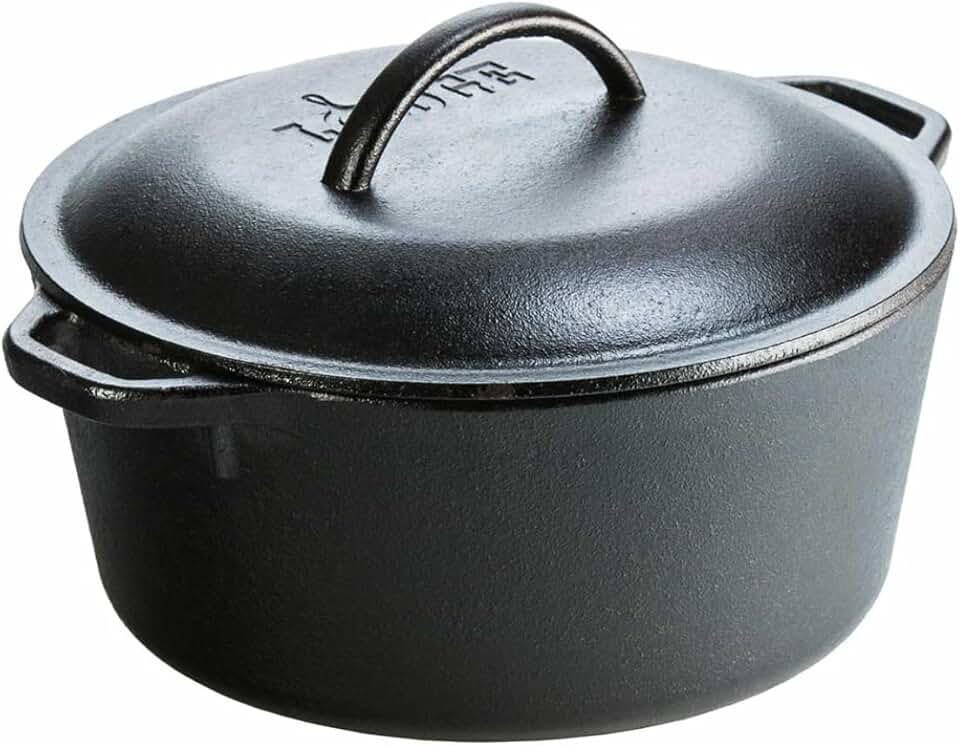
Lodge Cast Iron Dutch Oven (Raw)
The original Lodge Cast Iron Dutch Oven is a no-frills workhorse. It comes pre-seasoned but requires regular maintenance to keep the seasoning intact. This raw version is heavier and more porous than enameled options, meaning it needs more care to prevent rust. However, it is nearly indestructible and can go from stovetop to oven to campfire with ease. It is the best option for those who want the authentic cast iron experience at the lowest possible cost.
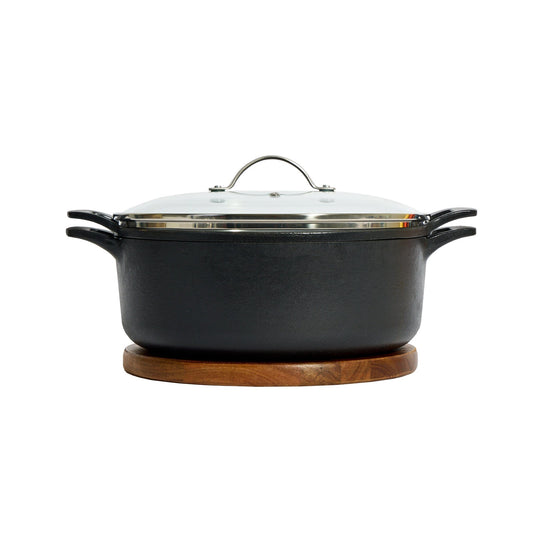
Milk Street Widebody Dutch Oven
For a modern take on the classic design, the Milk Street Widebody Dutch Oven offers a unique advantage: a griddle lid. This versatile piece allows you to cook multiple items simultaneously, such as searing meat in the pot while warming buns on the lid. The enameled interior is smooth and reactive, making it suitable for acidic dishes like tomato sauces. It is a great choice for cooks who want versatility and a sleek, minimalist aesthetic.
As an Amazon Associate, we may earn from qualifying purchases.
Choosing the right size and shape
Selecting the correct Dutch oven starts with matching the vessel’s geometry to your cooking style. The shape dictates how heat circulates and how much surface area is exposed for browning, while the quart size determines whether you can actually fit your intended meal inside without overflowing.
Round vs. Oval: Geometry and Use
Round Dutch ovens are the versatile workhorses of the kitchen. Their circular shape promotes even heat distribution from the bottom up, making them ideal for tasks that require stirring or braising in a circular motion. The Le Creuset 5.5-Quart Round Dutch Oven is a longstanding favorite because its shape accommodates everything from loaves of bread to pot roasts with equal ease. If you primarily make stews, soups, or baked goods, round is the safer, more flexible choice.
Oval Dutch ovens, by contrast, are specialized tools designed for larger cuts of meat. The elongated shape allows you to fit whole chickens, racks of lamb, or large briskets that simply won’t fit in a round pot. The Staub 7-Quart Oval Cocotte is a prime example; its dimensions are tailored for roasting large proteins while retaining moisture. If your cooking revolves around whole birds or large roasts, the oval shape provides a functional advantage that round pots cannot match.
Sizing for Your Household
Quart size should be determined by the number of people you feed and the type of dishes you prepare most often. A 3-quart pot is suitable for one or two people, perfect for small batches of sauce or individual servings. However, for most households, a 5- to 6-quart capacity strikes the best balance between versatility and storage.
For families of four or more, or for those who frequently make large batches of chili, soup, or stew, a 7-quart or larger pot is necessary. The Lodge 6-Quart Essential Enameled Cast Iron Dutch Oven offers a robust capacity for its price point, handling large volumes without the bulk of a 9-quart behemoth. Avoid buying a pot significantly larger than you need; excess empty space can lead to uneven cooking and wasted energy. Measure your largest pot lid or oven shelf to ensure your chosen size fits your kitchen’s physical constraints.
Frequently asked questions about dutch ovens
How to know if a Dutch oven is good quality?
Enameled cast iron is theoretically durable, but the difference between a decent pot and an heirloom piece often comes down to warranty length and manufacturing consistency. Brands like Le Creuset and Staub offer extensive warranties that signal confidence in their enamel integrity. A short warranty period can indicate lower-quality materials or thinner enamel coatings that are more prone to chipping over time.
Can you use metal utensils with enameled cast iron?
While enameled surfaces like those on the Staub 5.5-Quart Cocotte are harder than bare cast iron, they are still susceptible to scratching. Metal utensils can damage the enamel finish, exposing the iron beneath to rust and affecting the pot's appearance. It is best to use wooden, silicone, or nylon tools to preserve the non-stick properties and aesthetic of the enamel.
Is enameled cast iron better than bare cast iron?
Enameled cast iron, such as the Le Creuset Signature Round, eliminates the need for seasoning and prevents acidic foods like tomato sauce from reacting with the metal. However, it requires more careful handling to avoid thermal shock or chipping. Bare cast iron is virtually indestructible and develops a natural non-stick patina, but it demands consistent maintenance and care to prevent rust.
No comments yet. Be the first to share your thoughts!