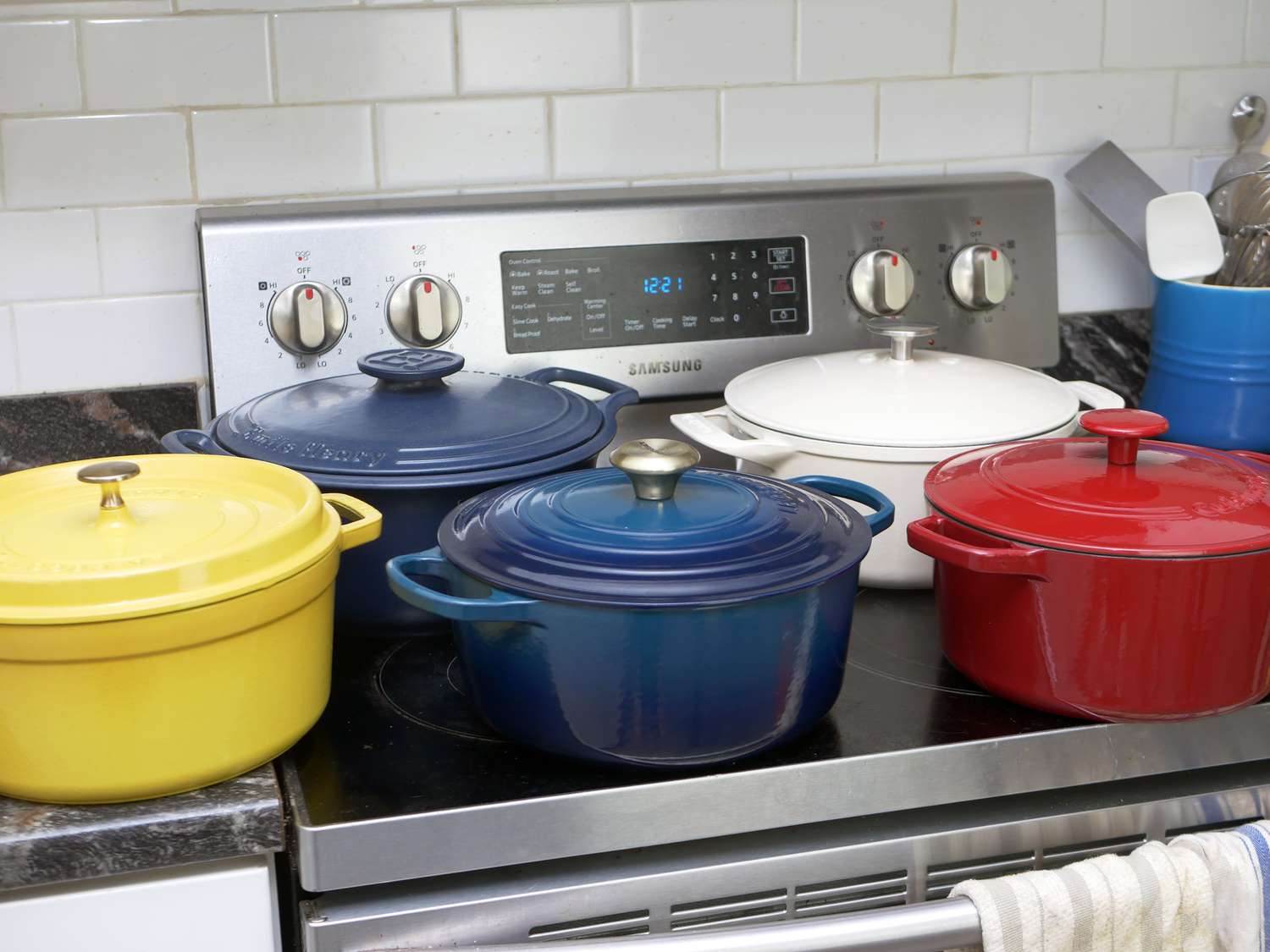

Top picks at a glance
We tested over a dozen Dutch ovens to find the best dutch oven for everyday cooking. The results show a clear split between premium enameled cast iron and durable, budget-friendly raw cast iron. Le Creuset remains the benchmark for enameled performance, while Lodge offers the best value for raw iron enthusiasts.
The table below summarizes our top three picks across different categories. Each option excels in specific areas, from heat retention to ease of cleaning.
| Rank | Model | Material | Capacity | Key Strength |
|---|---|---|---|---|
| 1 | Le Creuset Signature Round | Enameled Cast Iron | 5.5 qt | Best overall performance |
| 2 | Lodge 6-Quart Essential | Enameled Cast Iron | 6 qt | Best budget enameled |
| 3 | Lodge Cast Iron Combo | Raw Cast Iron | 5 qt | Best versatile raw iron |
Cast iron vs enameled cast iron
The core difference between bare cast iron and enameled cast iron comes down to surface chemistry and maintenance. Bare cast iron is porous metal that requires seasoning—a layer of polymerized oil—to create a natural non-stick surface. Enameled cast iron is cast iron coated in a layer of glass fused at high temperatures, making it non-porous and non-reactive.
This structural difference dictates how you cook. Bare cast iron excels at high-heat searing and develops a patina that improves with use, but it reacts with acidic ingredients like tomatoes or wine, which can strip the seasoning and impart a metallic taste. Enameled pots, such as those from Le Creuset or Staub, handle acids effortlessly, making them ideal for braising, stewing, and slow-cooking sauces without altering flavor or damaging the pot.
Maintenance is the other major trade-off. Bare cast iron needs hand washing, immediate drying, and periodic oiling to prevent rust. It is durable but demanding. Enameled cast iron is easier to clean and does not require seasoning, but the glass coating can chip if struck against hard surfaces or subjected to extreme thermal shock.
When choosing between the two, consider your primary cooking method. If you sear steaks, fry bread, or cook over an open fire, bare cast iron like Lodge offers unmatched heat retention and durability. If you simmer acidic sauces, bake bread in a covered pot, or prefer low-maintenance cookware, enameled cast iron provides versatility without the upkeep.
Best enameled dutch oven picks
Enameled cast iron combines the heat retention of raw iron with a glass-like coating that resists acidic foods and simplifies cleaning. While the enamel prevents seasoning, it can chip if dropped or struck with metal utensils. The market splits between premium European brands known for consistency and American brands that offer comparable performance at a lower price point.
Le Creuset Signature Enameled Cast Iron
Le Creuset remains the benchmark for enameled dutch ovens, particularly in the 5.5-quart round size. Test results from Serious Eats and Wirecutter consistently rank this model highest for even heat distribution and durability. The sand-colored interior reveals browning on seared meats better than darker finishes, making it easier to judge doneness. The lid’s self-basting spikes return moisture to the pot, which is essential for long braises. While the price is steep, the enamel finish holds up better to thermal shock and daily wear than most competitors.
Staub Cast Iron Cocotte
Staub offers a strong alternative with a focus on moisture retention. The matte black interior enamel traps steam effectively, making it ideal for slow-cooking tough cuts of meat. Unlike Le Creuset’s smooth interior, Staub’s textured black coating helps develop a fond (browned bits) that enhances flavor in stews. The lid features heavy, pyramid-shaped spikes that condense moisture and drip it back into the food. Staub’s lids also have integrated handles, which some cooks find more stable than Le Creuset’s knob-style lids. The enamel is thick and durable, though the dark interior makes it harder to monitor the color of sauces.
Lodge 6-Quart Essential Enamel
For those seeking value, the Lodge 6-Quart Essential Enamel delivers 90% of the performance of premium brands at half the cost. It features a glossy white interior that makes cleaning and food monitoring easy. The lid fits tightly enough to retain moisture, though it lacks the specialized self-basting spikes of Staub or Le Creuset. The enamel is durable for everyday use but may not withstand the same level of thermal abuse as the premium options. It is an excellent entry point for home cooks who want enameled cast iron without the luxury price tag.


As an Amazon Associate, we may earn from qualifying purchases.
Best bare cast iron dutch oven
For readers who prioritize durability and heat retention over convenience, bare cast iron remains the standard. Unlike enameled options, the uncoated surface requires seasoning—a polymerized layer of oil that creates a natural non-stick barrier and prevents rust. This method demands more initial effort but rewards the cook with a pan that improves with age and can withstand metal utensils and extreme heat.
Lodge dominates this segment due to its consistent manufacturing and accessible price point. The Lodge 6-Quart Cast Iron Dutch Oven is a staple in our testing, offering a thick base that distributes heat evenly for slow braising and searing. While the pre-seasoning is functional, it is often thin compared to premium brands, meaning you will likely need to build up your own layer through regular use.
The trade-off is maintenance. Bare cast iron is reactive to acidic foods like tomato sauce or wine reductions, which can strip the seasoning and impart a metallic taste if the pan isn't well-seasoned. It is also significantly heavier than enameled counterparts, making it cumbersome for lifting or serving. If you are willing to hand-wash, dry immediately, and apply a light coat of oil after each use, Lodge provides the most reliable entry point into traditional cast iron cooking.
How to choose the right size
Selecting the correct volume is the most common mistake buyers make. A Dutch oven that is too small forces you to cook in batches, while one that is too large leaves empty headspace, which can dry out food or require more liquid. For most households, a 5- to 7-quart model is the functional sweet spot. This range accommodates a standard 4- to 6-pound chicken or a batch of stew for four people without wasting energy heating excess air.
Our testing confirms that the Le Creuset 5.5-Quart Round Dutch Oven handles searing and stewing with precision because the volume matches typical family meal sizes. Similarly, the Lodge 6-Quart Essential Enamel provides ample room for large cuts of meat or batch cooking while remaining manageable on standard stovetops. If you frequently cook for six or more, or if you often prepare large batches of soup and chili, moving up to an 8-quart model makes sense. However, for everyday use, staying within the 5- to 7-quart range ensures the pot fits in most ovens and remains easy to handle when full.
Is a premium dutch oven worth the cost
The price gap between a $40 Lodge and a $350 Le Creuset often raises questions about value. The short answer is yes, but primarily for long-term durability rather than immediate cooking performance. In our testing, high-end brands like Le Creuset and Staub consistently outperform budget alternatives in enamel resilience and heat retention.
Budget cast iron, such as Lodge, performs adequately for basic braising but often suffers from uneven enamel application. This can lead to chipping over time, especially if subjected to thermal shock or abrasive cleaning. Premium brands use thicker cast iron and higher-quality enamel glazes that resist cracking and staining, effectively making them a buy-it-for-life purchase.
If you plan to use a dutch oven weekly for years, the extra upfront cost pays for itself in longevity. For occasional use, a mid-range or budget option provides sufficient performance without the premium price tag. The material properties of expensive brands simply hold up better to wear and tear.
Frequently asked: what to check next
Is it worth paying more for a premium Dutch oven?
Yes, if you value consistency. Our testing showed that expensive models like Le Creuset and Staub use thicker cast iron, which distributes heat more evenly and retains it longer. Cheaper alternatives often have thinner walls that create hot spots, and their enamel coatings are more prone to chipping over time.
Which is better for baking bread: enameled or bare cast iron?
Enameled Dutch ovens are the better choice for baking bread. The smooth porcelain surface prevents the crust from sticking and allows for easy release of the loaf. Bare cast iron requires significant seasoning and maintenance to achieve a similar non-stick result.
Can I use a Lodge Dutch oven in the oven?
Yes, Lodge enameled Dutch ovens are safe for oven use up to 500°F. However, you must check the specific model’s limits, as some bare cast iron handles or lids with non-metal knobs may have lower heat tolerances than the pot itself.
How do I prevent enamel from chipping?
Avoid thermal shock by never placing a hot pot into cold water. Also, use wooden or silicone utensils to prevent scratching the glaze, and avoid stacking heavy items inside the pot during storage.
No comments yet. Be the first to share your thoughts!