
Top Picks for Every Budget
We tested dozens of Dutch ovens to find the best options for searing, braising, and baking. Whether you need a heavy-duty workhorse or a colorful centerpiece, these are the top-rated cast iron and enameled choices across all price points.


As an Amazon Associate, we may earn from qualifying purchases.
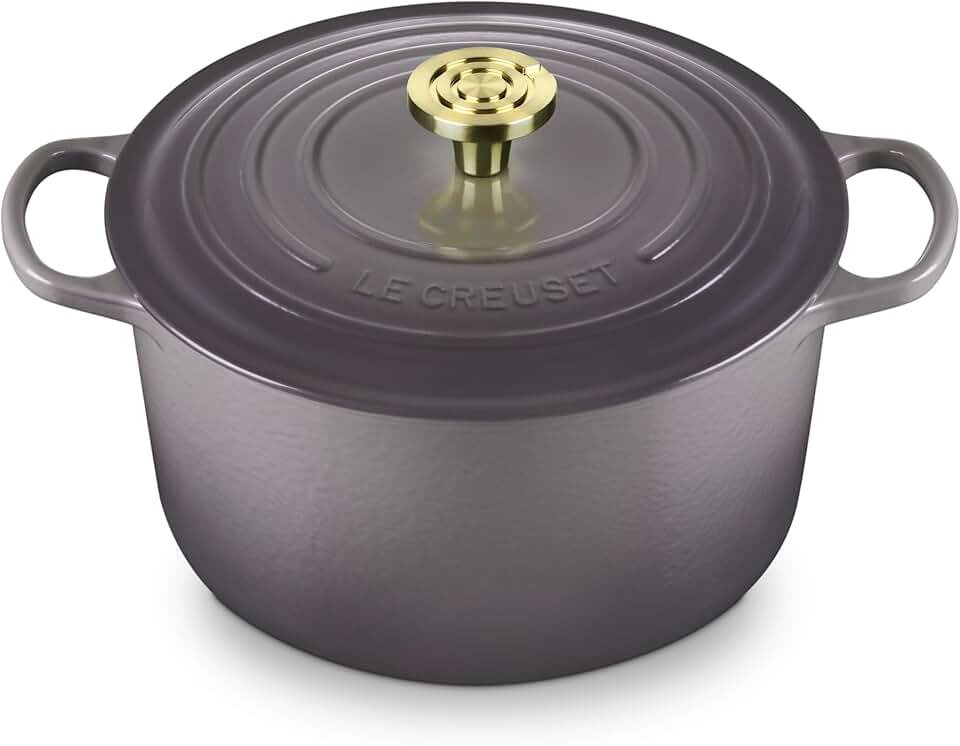
The Le Creuset 5.5-Quart Round Dutch Oven remains our top pick for serious home cooks. It distributes heat evenly and maintains temperature better than most competitors, making it ideal for slow braises and crusty bread. If you prefer a matte black interior that resists staining, the Staub 5.5-Quart Cocotte is a close second, featuring self-basting spikes on the lid to keep meats moist.
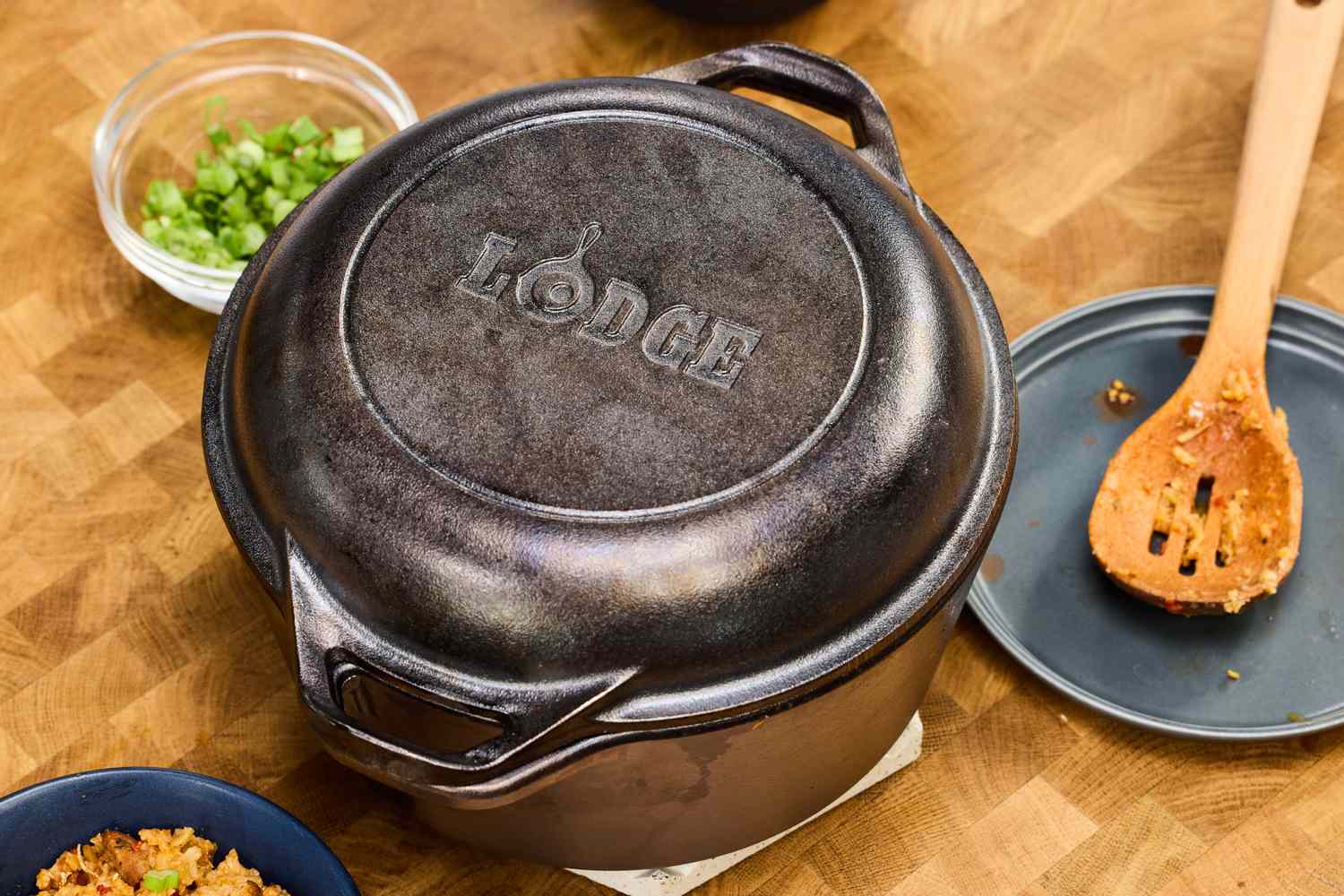
For budget-conscious buyers, the Lodge 6-Quart Essential Enameled Cast Iron Dutch Oven delivers exceptional value. It performs nearly as well as premium brands for everyday tasks like roasting chicken or making chili, and its lid can convert into a skillet for added versatility. This combination of durability and affordability makes it the best choice for students, first-time buyers, or anyone who wants a reliable Dutch oven without the premium price tag.
Cast iron versus enameled choices that change the plan
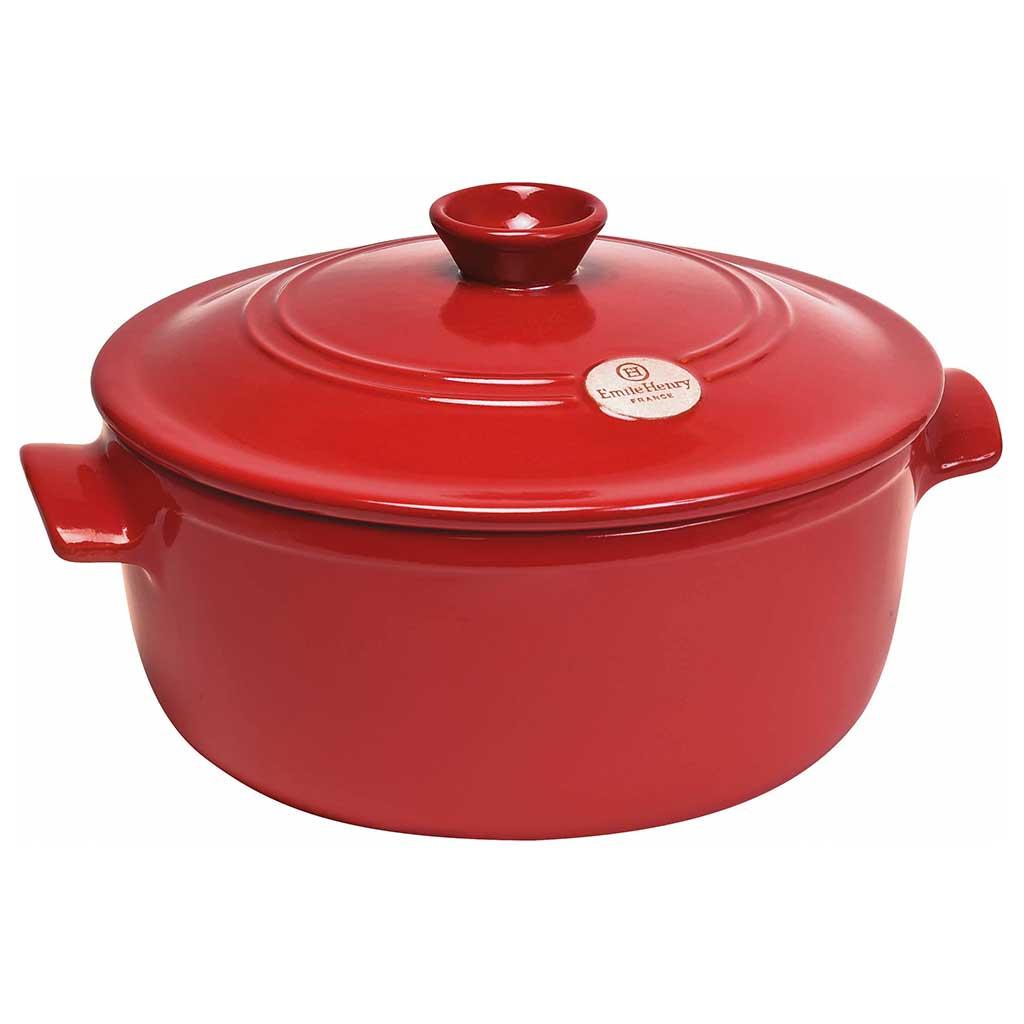
The choice between raw and enameled cast iron comes down to how much maintenance you want versus how much versatility you need. Raw cast iron is uncoated metal that relies on seasoning—a polymerized layer of oil—to become nonstick and rust-resistant. Enameled cast iron is coated with a glass-like porcelain layer fused to the metal during firing. This enamel creates a barrier that prevents reactions with acidic foods, but it removes the need for seasoning entirely.
Raw cast iron excels at high-heat searing and developing a natural nonstick surface over time. It is incredibly durable and can withstand metal utensils, though it requires hand-washing and immediate drying to prevent rust. Enameled cast iron, by contrast, is ideal for slow-cooking acidic dishes like tomato sauce or wine braises without metallic taste. However, the enamel can chip if struck against hard surfaces, and most manufacturers recommend avoiding metal utensils to preserve the finish.
Maintenance is the biggest practical difference. Raw cast iron needs regular oiling and careful cleaning to maintain its seasoning. Enameled cast iron is dishwasher safe and requires no seasoning, making it more convenient for everyday use. Price also varies; raw cast iron is generally cheaper upfront, while premium enameled options from brands like Le Creuset or Staub carry a higher cost due to the complex enamel application process.
| Feature | Raw Cast Iron | Enameled Cast Iron |
|---|---|---|
| Maintenance | Requires seasoning and drying | No seasoning needed; dishwasher safe |
| Acidic Foods | Can react and impart metallic taste | Safe for tomatoes, wine, and vinegar |
| Durability | Indestructible; handles metal utensils | Enamel can chip; use wood or silicone |
| Heat Retention | Excellent, heats slowly | Excellent, similar to raw |
| Price Range | $20 – $50 | $100 – $400+ |
Le Creuset and Staub design differences
Le Creuset and Staub dominate the premium enameled cast iron market, yet they solve cooking problems in opposite ways. Both brands offer lifetime warranties that justify their higher price points for long-term use, but their interior designs dictate which recipes they handle best.
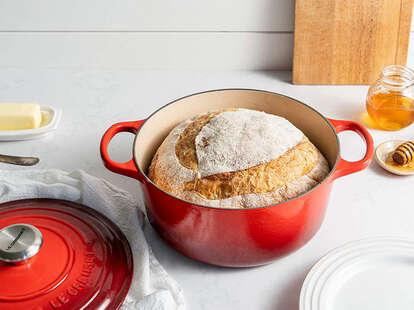
Le Creuset favors a smooth, glossy white enamel interior. This design excels at searing and browning because the light surface makes it easy to monitor the Maillard reaction on steaks and chicken. The smooth walls also make deglazing straightforward and simplify cleanup, as food residues don't stick as aggressively as they might in textured surfaces. Serious Eats notes that Le Creuset’s round ovens ace stewing and searing tests, largely due to this versatile, easy-to-clean interior [src-serp-1].
Staub takes a different approach with its matte black, sandblasted interior and distinctive self-basting spikes on the lid. These spikes condense steam and drip it back over the meat, keeping braises moist without manual basting. This design is ideal for slow-cooked dishes like beef bourguignon or pulled pork, where moisture retention matters more than visual monitoring of browning. The dark interior also hides stains from tomato-based sauces, though it can make it harder to see if food is burning during the initial sear.
Choosing between them depends on your primary cooking style. If you sear frequently and value easy cleanup, Le Creuset’s smooth interior is the pragmatic choice. If you spend more time braising and roasting, Staub’s self-basting technology reduces the need for hands-on attention, making it the better tool for set-it-and-forget-it meals.
Budget picks that actually work
Use this section to make the Best Dutch Oven decision easier to compare in real life, not just on paper. Start with the reader's actual constraint, then separate must-have requirements from details that are merely nice to have. A practical choice should survive normal use, maintenance, timing, and budget. If a recommendation only works in an ideal situation, call that out plainly and give the reader a fallback path.
The simplest way to use this section is to write down the must-have criteria first, then compare each option against those criteria before weighing nice-to-have features.
Choosing the right size for your kitchen
Most home cooks buy a Dutch oven that is too large. A 7-quart pot looks impressive on the stove, but it is difficult to handle, cools down too quickly when you add ingredients, and wastes energy heating empty space. Selecting the correct capacity is about matching the vessel to your typical cooking habits, not your maximum possible guests.
5- to 6-Quart: The Sweet Spot
For most households, a 5- or 6-quart Dutch oven is the most versatile size. It handles a whole chicken, a standard batch of chili, or enough stew for four people with leftovers. This capacity is manageable for one or two cooks and fits comfortably in most standard ovens. If you only plan to buy one pot, this is the size that covers 80% of daily cooking needs.
3- to 4-Quart: Small Batches
A 3- or 4-quart pot is ideal for couples, solo cooks, or small kitchens. It is perfect for simmering sauces, cooking rice for two, or making a small loaf of bread. The smaller thermal mass means it heats up faster and cools down quicker, which is useful for dishes that require precise temperature control. However, it will struggle with larger cuts of meat or big batches of soup.
8-Quart and Above: Large Gatherings
Oversized Dutch ovens (8 quarts and up) are specialized tools for large families, meal preppers, or outdoor cooking. They are heavy, cumbersome, and difficult to store in standard cabinets. Unless you regularly cook for six or more people or use the pot for deep-frying turkeys, a large pot will likely sit unused. The weight alone makes daily use tedious for most people.
Final checklist for buying your best dutch oven
Use this checklist to ensure your Dutch oven matches your cooking habits before you buy. Testing from Serious Eats and Wirecutter highlights that the right fit depends on capacity, material, and lid design.
A 5- to 6-quart Dutch oven is the best all-around size for most households. It handles family meals and large batches of soup without taking up excessive storage space. Smaller 3-quart models are better for singles or couples.
Choose bare cast iron if you want durability and don't mind seasoning. Pick enameled cast iron if you prefer easier cleanup and want to cook acidic foods like tomato sauce without worrying about metallic flavors.
Look for a tight-fitting lid to retain moisture during braising. Self-basting lids with spikes, like those found on Staub models, are excellent for roasting. Ensure the handles are oven-safe to at least 500°F for versatility.
No comments yet. Be the first to share your thoughts!