
Make the recipe
This no-knead sourdough method is designed specifically for the heat retention and steam trapping of a cast-iron Dutch oven. The thick walls of the pot mimic a professional steam-injected deck oven, allowing the crust to crisp while the interior stays tender. You only need five ingredients and a bit of patience. The active work time is under ten minutes; the rest is handled by fermentation and the oven.

The key to success here is temperature management. Because cast iron holds heat so efficiently, the initial high temperature creates the "oven spring"—the rapid rise of the bread before the crust sets. Removing the lid later allows the moisture to escape, ensuring the crust becomes shatteringly crisp rather than chewy. Letting the bread cool completely is non-negotiable; slicing it too early releases the steam that finishes cooking the crumb from the inside, resulting in a gummy texture.
Keep the texture right
A Dutch oven traps steam, which is essential for a good crust, but it also traps moisture that can turn your crumb gummy if you don’t manage it. The difference between a dense, wet loaf and an open, airy one comes down to three variables: hydration balance, lid timing, and heat management.
Start with a stiff dough. High hydration sounds romantic, but in a closed vessel, excess water has nowhere to go. Aim for 70-75% hydration. The dough should feel tacky but hold its shape when shaped. If it slumps completely, it’s too wet. A firmer dough creates stronger gluten walls that can expand without collapsing into a dense brick.
Your Dutch oven needs to be screaming hot before the dough hits it. A cold pot shocks the yeast and prevents the initial "oven spring." Preheat your empty pot at 500°F (260°C) for at least 45 minutes. Use an oven thermometer to verify the internal temperature; many ovens run 25°F cooler than the dial suggests.
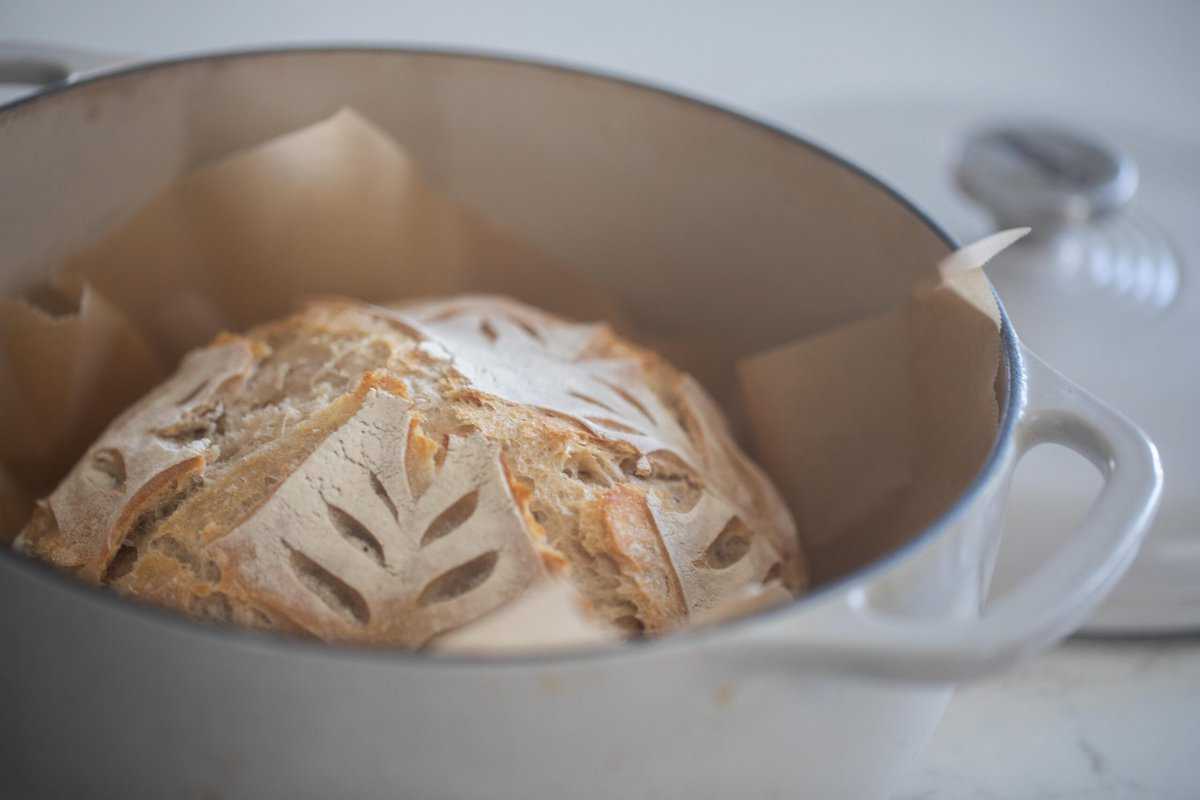
Keep the lid on for the first 20 minutes. This traps the moisture released by the dough, keeping the crust soft so it can expand fully. Removing the lid too early stops the rise and creates a thick, leathery skin that restricts volume.
Remove the lid and drop the temperature to 450°F (230°C). Bake for another 20-25 minutes. This dry heat evaporates surface moisture, setting the crust and creating that signature shatteringly crisp exterior. If the crust browns too fast, tent a piece of foil loosely over the top.
Don’t skip the cooling phase. Sourdough continues to cook internally for up to 30 minutes after you pull it out. Cutting into a warm loaf releases steam that turns the crumb gummy. Let it rest on a wire rack for at least two hours. The crust will crisp up further as it cools, and the interior will set into a clean, even texture.
Swaps That Still Work
You don’t need a perfect pantry to bake sourdough in a Dutch oven. The dough is forgiving, but some substitutions affect the crust, crumb, and rise more than others. Stick to swaps that preserve hydration and gluten structure.
Flour Substitutions
All-Purpose Flour: Use it if you lack bread flour. Expect a softer crumb and less chew. Increase hydration by 5–10% to compensate for the lower protein content.
Whole Wheat Flour: Replace up to 25% of your white flour. It adds nuttiness and density but can slow the rise. Let the dough rest longer to allow the bran to soften.
Rye Flour: Add only 5–10%. Rye is sticky and heavy. Too much will make your loaf dense and gummy. It’s a flavor booster, not a structural base.
Hydration and Fat
Oil or Butter: Traditional sourdough uses only flour, water, salt, and starter. Adding a tablespoon of oil or melted butter makes the crumb tender and the crust softer. Skip this if you want that classic, crackly artisan crust.
Milk or Yogurt: Swapping some water for milk or yogurt adds tang and richness. Yogurt tenderizes the gluten, so the loaf may spread slightly more. Adjust flour accordingly to maintain consistency.
Salt and Starter
Salt: Never skip salt. It strengthens gluten and controls fermentation. If you’re low on table salt, use kosher salt but weigh it, as volume measurements vary wildly between brands.
Starter: If your starter is weak, feed it twice 4–6 hours before baking. A vigorous, bubbly starter is the best leavening agent you have. Don’t rely on commercial yeast unless you’re making a quick bread, which changes the recipe entirely.
| Ingredient | Substitution | Impact on Crust | Impact on Crumb |
|---|---|---|---|
| Bread Flour | All-Purpose Flour | Softer, less crackly | Softer, less chewy |
| White Flour | Whole Wheat (25%) | Darker, thicker | Denser, nuttier |
| Water | Milk/Yogurt | Softer, paler | Tender, tangy |
| No Fat | Olive Oil (1 tbsp) | Harder, crispier | Stiffer, airier |
These swaps keep the process simple. You’re still baking in the same Dutch oven, using the same steam-trapping lid. The goal is a good loaf, not a complicated one.
Serve and store it
Your sourdough is ready when the crust is deep mahogany and the loaf sounds hollow when tapped. Let it rest on a wire rack for at least 30 minutes before slicing. This final bake continues inside the crumb, ensuring the texture sets properly. Cutting too soon releases steam and leaves the interior gummy.
For daily use, store the loaf in a bread box or a paper bag at room temperature. This preserves the crust’s crunch while keeping the interior soft. Avoid plastic bags for fresh bread, as trapped moisture makes the crust soft and promotes mold. If you must use plastic, line it with paper to absorb excess humidity.
If you aren’t eating the whole loaf in two days, freeze it. Slice the bread, wrap portions tightly in plastic wrap, and place them in a freezer-safe bag. It keeps well for up to three months. Thaw at room temperature or reheat slices directly from frozen.
To revive day-old crust, spritz the loaf with water and warm it in a 350°F (175°C) oven for 10 minutes. The moisture reactivates the starches, restoring that crisp snap. Avoid the microwave, which turns the crust leathery and the crumb rubbery.
Common questions about Dutch ovens for sourdough
Choosing the right pot can feel overwhelming with so many options. Here are answers to the practical questions that usually decide the purchase.
What size Dutch oven do I need for a standard loaf?
A 5-quart (5L) pot is the sweet spot for most home bakers. It fits a standard boule with enough room for the dough to expand without touching the lid. You can squeeze a loaf into a 3.5-quart pot, but the crust will likely be uneven because the dough hits the sides. If you bake large country loaves, step up to 6 or 7 quarts.
Can I use a ceramic or enameled pot instead of raw cast iron?
Yes. Enameled cast iron from brands like Le Creuset or Staub works well because the enamel traps steam just like raw iron. Ceramic cocottes are also popular, but they often have thinner walls. This means they heat up faster but lose heat quicker when you open the lid. Raw cast iron is heavier and retains heat longer, which helps create a crispier crust.
Do I need a Dutch oven that is oven-safe?
Absolutely. You must preheat the pot in a 500°F (260°C) oven before baking. Most enameled pots are safe up to 500°F, but check the manufacturer’s manual. Some lids have plastic knobs that melt at high temperatures. If your lid has a plastic knob, remove it before preheating or use a metal knob replacement.
Is a round or oval Dutch oven better for sourdough?
Round is better. Sourdough dough expands in all directions. A round pot allows the loaf to rise evenly and form a nice dome. An oval pot is designed for roasts and stews. If you use an oval pot for bread, the loaf will stretch to fit the shape, resulting in an awkward, uneven crust that is harder to slice.
No comments yet. Be the first to share your thoughts!