
Sourdough & Dutch Ovens: A Perfect Pair
Dutch ovens are popular for sourdough because they create an ideal environment for bakery-quality loaves at home. This technique has historical roots, with early settlers using these versatile pots for many cooking needs.
Dutch ovens trap steam, which is essential for sourdough. This trapped steam keeps the dough surface moist during the initial baking phase, allowing for maximum oven spring. The enclosed environment also promotes a crisp, crackly crust, similar to professional bread ovens that inject steam.
The Maillard reaction, responsible for browning and flavor development, is facilitated by a Dutch oven's even heat distribution and moisture retention. This results in a deeply flavorful, richly colored crust. Consistent heat and moisture lead to a fantastic loaf, a principle understood by pioneers.
Dutch ovens were not originally designed for bread. Research from Utah State University Extension indicates they were versatile cooking pots used for stews and frying (Haws, 2018). Their effectiveness for sourdough highlights their inherent design strengths, making them a reliable tool for bakers.
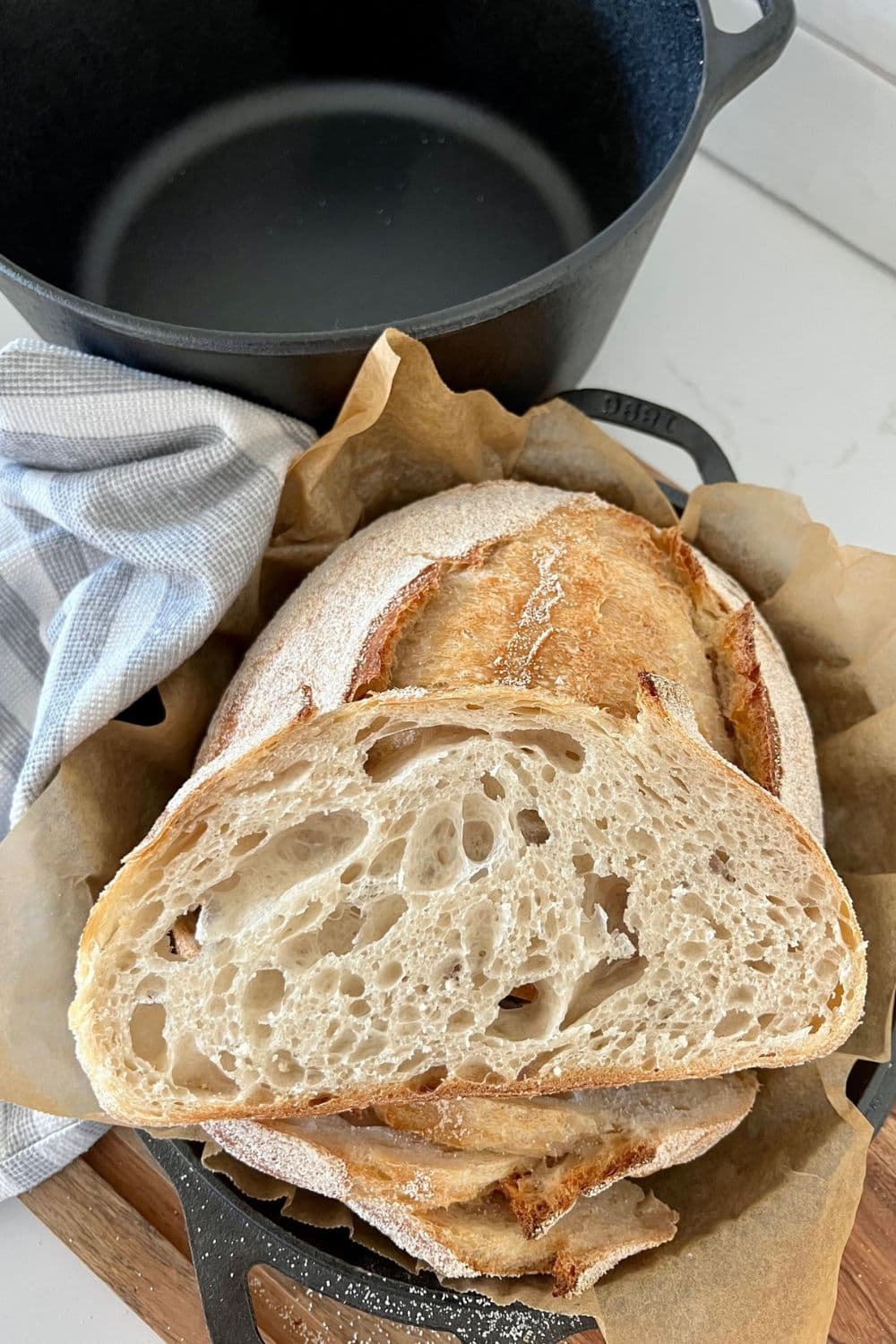
Key Dutch Oven Features for Sourdough
Not all Dutch ovens are created equal. While cast iron is common, consider the lid, wall thickness, and enamel coating, as these factors affect sourdough performance.
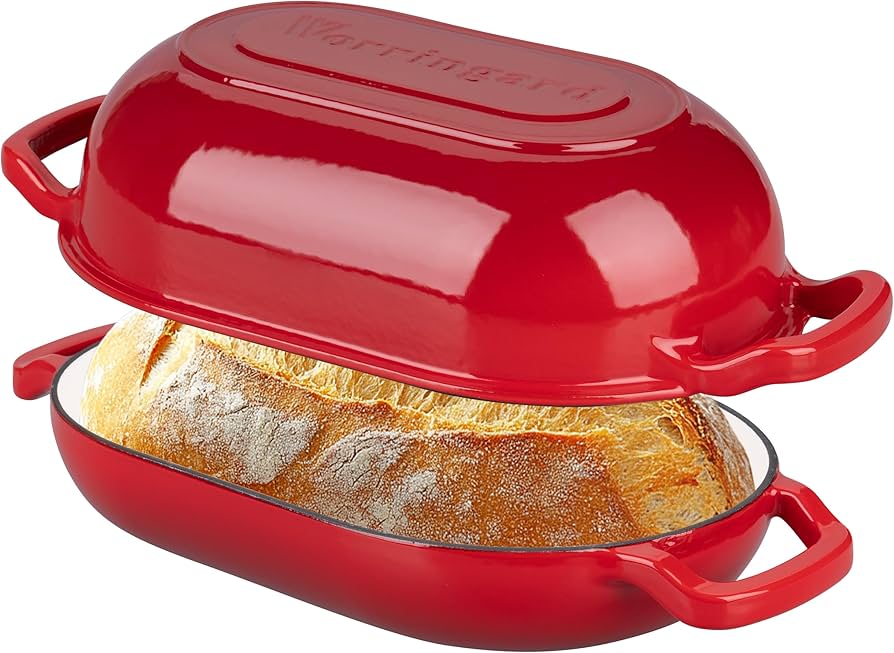
A tight-fitting lid is essential for trapping steam; even a small gap lets moisture escape. Look for lids that seal securely. A heavier lid helps maintain consistent temperature and pressure. Wall thickness impacts heat retention and even heating, with thicker walls holding heat more effectively for a consistent bake.
Enameled Dutch ovens are easier to clean and don't require seasoning but can be more expensive and chip. Bare cast iron requires seasoning to prevent rust and sticking but is durable and can impart flavor. Enameled is preferred for ease of cleaning, though well-seasoned bare cast iron works well.
A 5-quart Dutch oven is a good starting point for standard sourdough recipes. For larger loaves or other dishes, consider a 6- or 7-quart option. A wider base can make scoring easier, and larger loop handles are easier to grip with oven mitts.
- Tight-fitting lid: Essential for steam retention
- Thick walls: Provide even heat distribution and retention
- Appropriate capacity: 5-7 quarts is a good range
- Comfortable handles: For safe and easy maneuvering
Dutch Oven Comparison for Sourdough Baking
| Feature | Enameled Cast Iron | Bare Cast Iron |
|---|---|---|
| Ease of Cleaning | High | Low |
| Heat Retention | High | High |
| Reactivity with Dough | Low | Medium |
| Cost | Medium to High | Medium |
| Durability | High | High |
| Maintenance | Low | High - Requires Seasoning |
| Weight | Generally Heavier | Generally Lighter |
| Flavor Development (Crust) | Subtle | Potentially More Pronounced |
Illustrative comparison based on the article research brief. Verify current pricing, limits, and product details in the official docs before relying on it.
Top 7 Dutch Ovens for 2026
Choosing the best Dutch oven for sourdough depends on your budget, needs, and preferences. Here are seven top contenders, with details to help you make the right decision.
Lodge 6-Quart Enameled Cast Iron Dutch Oven ($80-$120): A classic for a reason. Lodge offers excellent value for the price. It's durable, holds heat well, and is readily available. However, the enamel can be prone to chipping with rough handling. Pros: Affordable, durable, good heat retention. Cons: Enamel can chip, heavier than some options.
Le Creuset 5.5-Quart Round Dutch Oven ($300-$450): The gold standard. Le Creuset is known for its exceptional quality and beautiful design. The enamel is incredibly durable, and the heat distribution is superb. It’s a significant investment, but it will last a lifetime. Pros: Superior enamel quality, excellent heat distribution, beautiful design. Cons: Very expensive.
Staub 5.5-Quart Round Dutch Oven ($300-$400): A strong competitor to Le Creuset. Staub’s black matte enamel interior is particularly well-suited for browning and developing flavor. The lid also features small spikes on the underside, designed to distribute condensation evenly. Pros: Excellent browning, durable enamel, innovative lid design. Cons: Expensive, can be difficult to clean.
Cuisinart 7-Quart Chef’s Classic Enameled Cast Iron Dutch Oven ($100-$150): A great mid-range option. Cuisinart offers a good balance of quality and affordability. It’s a solid performer for sourdough and other braised dishes. Pros: Affordable, large capacity, good heat retention. Cons: Enamel not as durable as Le Creuset or Staub.
Victoria Cast Iron 6-Quart Dutch Oven ($200-$250): A direct-to-consumer brand gaining popularity. Victoria offers high-quality cast iron at a more accessible price point than Le Creuset or Staub. The enamel finish is attractive and durable. Pros: Good value, durable enamel, attractive design. Cons: Newer brand, long-term durability still being assessed.
Great Jones Dutchess 6.75-Quart Dutch Oven ($160-$200): Another popular direct-to-consumer option. Great Jones focuses on stylish, functional cookware. The Dutchess is known for its vibrant colors and excellent heat retention. Pros: Stylish design, good heat retention, durable enamel. Cons: Limited color options, can be heavy.
Brabantia 6.3 Quart Cast Iron Dutch Oven ($180-$220): A reliable choice with a focus on sustainability. Brabantia prioritizes eco-friendly materials and production methods. Their Dutch oven delivers consistent performance and is backed by a 10-year guarantee. Pros: Sustainable materials, good performance, long guarantee. Cons: May not have the same prestige as some other brands.
Beyond the Basics: Lid Types Explained
Dutch oven lid design can significantly impact sourdough baking. The two main types are flat lids and self-basting lids.
Flat lids are smooth on the underside, creating a tight seal and retaining moisture effectively. They are common and generally preferred for sourdough baking, as the flat surface allows condensation to drip back down, maintaining a humid environment.
Self-basting lids have ridges that collect and redistribute condensation. While beneficial for some dishes, this isn't ideal for sourdough, as constant dripping can disrupt crust formation and lead to a less crispy exterior. A flat lid consistently delivers better results.
Cast iron lids are heavy and provide excellent heat retention. Glass lids allow monitoring without losing steam but don't retain heat as well. A heavier lid helps maintain consistent temperature and pressure, ensuring more steam is
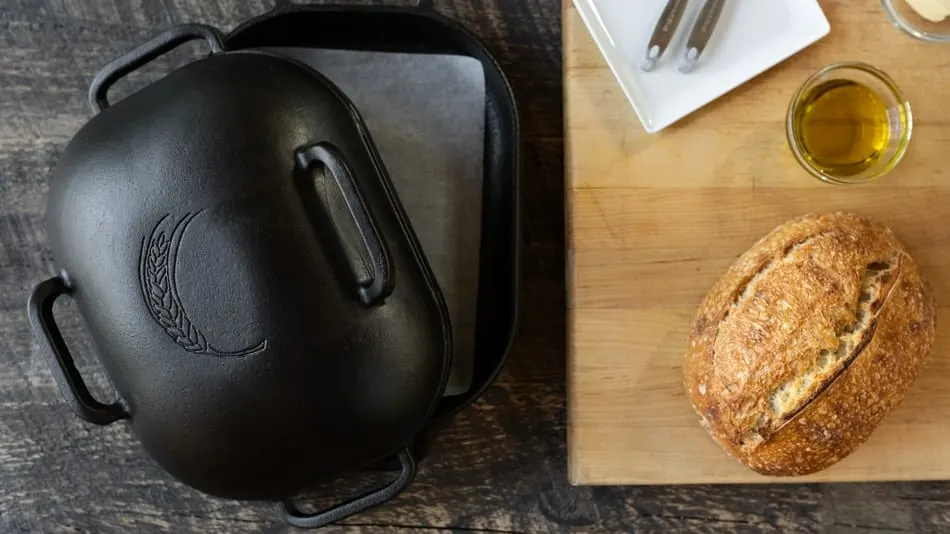
Sourdough Baking with Your Dutch Oven: A Step-by-Step
Now that you’ve chosen your Dutch oven, let’s get baking. Here’s a step-by-step guide to baking sourdough in a Dutch oven, based on my preferred method. This assumes you have a well-established sourdough starter and have already mixed and bulk fermented your dough.
First, preheat your Dutch oven in the oven at 450°F (232°C) for at least 30 minutes. This is crucial for achieving a good crust. While the Dutch oven preheats, gently shape your dough into a round or oval. Score the top of the dough with a sharp knife or lame – this controls the expansion during baking. Carefully remove the hot Dutch oven from the oven. Place a piece of parchment paper inside, allowing it to hang over the sides for easy removal. Gently lower the dough into the Dutch oven. Cover and bake for 20 minutes.
Reduce the oven temperature to 425°F (218°C) and bake for another 20-25 minutes, uncovered. Keep a close eye on the crust; you want it to be a deep golden brown. To check for doneness, use an instant-read thermometer – the internal temperature should be around 205-210°F (96-99°C). Let the loaf cool completely on a wire rack before slicing.
Common problems? A gummy crumb often indicates underbaking. Make sure the internal temperature reaches 205-210°F. A pale crust could mean insufficient preheating or not enough steam. Ensure the Dutch oven is fully preheated and the lid is sealed tightly. Don't be afraid to experiment with baking times and temperatures to find what works best for your oven and dough.
- Preheat Dutch oven at 450°F (232°C) for 30 minutes
- Shape and score the dough
- Place dough in preheated Dutch oven with parchment paper
- Cover and bake for 20 minutes
- Reduce temperature to 425°F (218°C) and bake uncovered for 20-25 minutes
- Cool completely before slicing
Dutch Oven Care & Maintenance
Proper care will ensure your Dutch oven lasts a lifetime. The maintenance routine differs slightly depending on whether you have bare cast iron or an enameled version.
For bare cast iron, avoid using soap, as it can strip away the seasoning. Rinse with hot water and scrub gently with a non-abrasive brush. If food is stuck, simmer water in the Dutch oven for a few minutes to loosen it. After cleaning, dry thoroughly and apply a thin layer of oil to prevent rusting. For enameled Dutch ovens, soap is generally safe to use. Avoid abrasive cleaners, as they can damage the enamel.
Preventing rust is key for bare cast iron. Always dry the Dutch oven thoroughly after washing and apply a thin coat of oil. Store it in a dry place. If rust does develop, scrub it off with steel wool and re-season the Dutch oven. To restore seasoning, coat the Dutch oven with oil and bake it upside down at 350°F (177°C) for an hour.
- Bare Cast Iron: Rinse with hot water, avoid soap, dry thoroughly, oil after each use
- Enameled Cast Iron: Safe to use soap, avoid abrasive cleaners
- Rust Prevention: Dry thoroughly, oil after each use, store in a dry place
Standout Options: Worth a Closer Look
From the list of seven, a few Dutch ovens really stand out for their combination of value and performance. The Lodge 6-Quart Enameled Cast Iron Dutch Oven is an excellent choice for budget-conscious bakers. It delivers reliable results at a fraction of the cost of Le Creuset or Staub. It’s a fantastic entry point into Dutch oven baking.
If you’re willing to invest a bit more, the Victoria Cast Iron 6-Quart Dutch Oven offers exceptional quality for the price. The enamel is durable and attractive, and the overall build quality is impressive. It’s a great alternative to the premium brands without sacrificing performance.
Finally, for those who prioritize style and functionality, the Great Jones Dutchess 6.75-Quart Dutch Oven is a standout. Its vibrant colors and sleek design will brighten up any kitchen, and it performs beautifully for sourdough and other dishes. It’s a statement piece that also happens to be a fantastic cooking tool.
No comments yet. Be the first to share your thoughts!