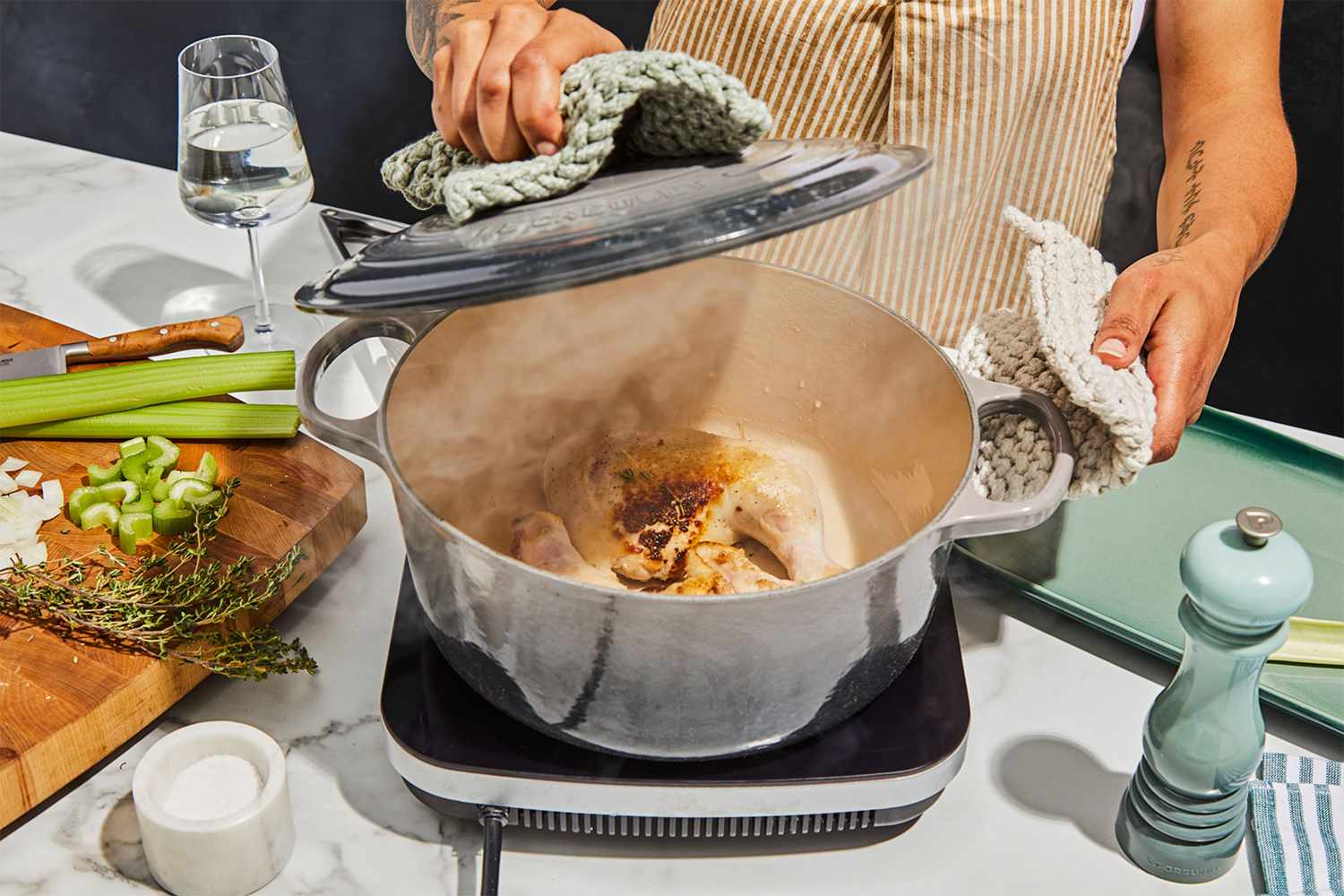

The best dutch oven picks
Choosing the right dutch oven depends on what you cook most often. We tested dozens of models across price points and materials to identify the top performers. The following picks cover the best options for everyday cooking, budget-conscious buyers, and those who prefer specific materials.


As an Amazon Associate, we may earn from qualifying purchases.
Best Overall: Le Creuset Signature Round Dutch Oven Le Creuset remains the gold standard for enameled cast iron. It heats evenly and retains heat exceptionally well, making it ideal for slow-cooked stews and braises. The enamel finish is durable and resistant to chipping, and the vibrant colors look great on the table. While it commands a higher price, its longevity and performance justify the cost for most home cooks.
Best Budget Pick: Lodge 6-Quart Essential Enamel Lodge offers the most affordable entry into enameled cast iron without sacrificing much performance. It holds heat well and is versatile enough for roasting, baking, and frying. The enamel coating is slightly less refined than premium brands, but it performs admirably for the price. It is a solid choice for beginners or those who want a dutch oven for occasional use.
Best for Braising: Staub Cocotte Staub’s matte black interior enamel is designed to promote browning and deglazing, making it excellent for searing meat before braising. The heavy lid with self-basting spikes returns moisture to the food, resulting in tender, flavorful dishes. Staub ovens are heavier than Le Creuset but offer a unique cooking advantage for meat-centric meals.
Best Raw Cast Iron: Lodge Cast Iron Dutch Oven For those who prefer traditional raw cast iron, Lodge provides a reliable, no-frills option. It requires seasoning to maintain its non-stick surface and prevent rust, but it develops a superior patina over time. It is incredibly durable and can go from stovetop to oven to campfire. This is the best choice for cooks who want maximum versatility and don’t mind the maintenance.
How we tested dutch ovens
To identify the best dutch oven, we subjected Le Creuset, Staub, Lodge, and several other top contenders to a rigorous battery of kitchen tests. Our methodology focused on four core performance metrics: heat retention, lid fit, handle comfort, and ease of cleaning. We evaluated each pot across a range of common cooking techniques, from high-heat searing to low-and-slow braising, ensuring the results reflect real-world usage rather than just studio conditions.
Heat retention was measured by monitoring how quickly each pot recovered temperature after adding cold ingredients, a critical factor for achieving a proper sear. We also inspected the lid fit, looking for tight seals that trap moisture and flavor during braising. Comfort was assessed by handling each pot during extended cooking sessions, noting weight distribution and handle ergonomics. Finally, we tested cleaning efficiency by scrubbing burnt-on residues and checking for enamel chipping or staining.
Our testing process mirrors the approach used by reputable sources like Serious Eats and America’s Test Kitchen, which prioritize practical performance over brand prestige. By comparing these objective data points, we can determine which dutch oven offers the best balance of durability, efficiency, and user experience for your kitchen.
Enameled vs. raw cast iron
Use this section to make the Best Dutch Oven decision easier to compare in real life, not just on paper. Start with the reader's actual constraint, then separate must-have requirements from details that are merely nice to have. A practical choice should survive normal use, maintenance, timing, and budget. If a recommendation only works in an ideal situation, call that out plainly and give the reader a fallback path.
| Factor | What to check | Why it matters |
|---|---|---|
| Fit | Match the option to the primary use case. | A good deal still fails if it does not fit the job. |
| Condition | Verify age, wear, and service history. | Hidden condition issues erase upfront savings. |
| Cost | Compare purchase price with likely upkeep. | The cheapest option is not always the lowest-cost option. |
Le Creuset vs. Staub: Which premium dutch oven fits your kitchen?
Le Creuset and Staub are the undisputed leaders in the premium enameled cast iron market. While both brands offer exceptional durability and heat retention, their design philosophies diverge sharply, affecting how they perform and look in your kitchen.
Le Creuset favors a smooth, glossy aesthetic. The interior enamel is polished to a mirror finish, which makes it easier to monitor browning and clean. This smooth surface, however, can make food stickier during long braises compared to Staub’s matte black interior. Staub’s interior is coated in a matte, sand-blasted enamel that is naturally more resistant to sticking and staining. This texture encourages better fond development, which is crucial for building rich flavor in stews and braises.
The lids also serve different purposes. Le Creuset features a traditional tight-fitting lid with no internal spikes, relying on its heavy weight to create a seal. Staub’s lid is domed and studded with small spikes on the underside. These spikes condense moisture and drip it back onto the food, creating a self-basting effect that keeps meats moist during slow cooking. This design makes Staub particularly effective for roasting whole chickens or tough cuts of beef.
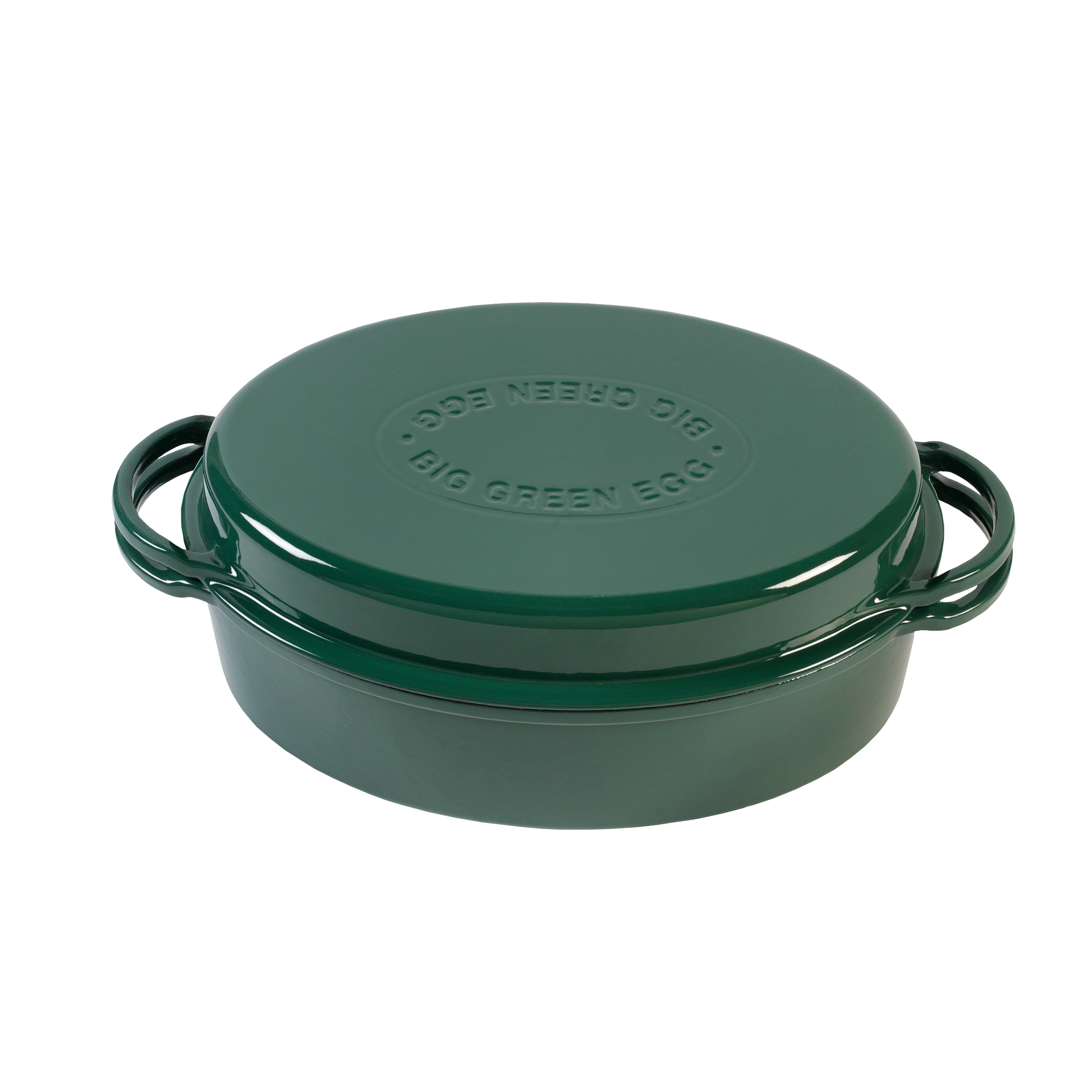
Both brands come with lifetime warranties and hold their resale value remarkably well. If you prioritize visual elegance and easy cleaning, Le Creuset is the superior choice. If you value non-stick performance and self-basting capabilities for heavy cooking, Staub’s functional design edges out the competition.
Budget picks that hold up
You do not need to spend $400 to get a dutch oven that performs well. The market for affordable enameled cast iron has matured significantly, with brands like Lodge and Tramontina offering products that close the gap on premium options. These lower-cost alternatives prove that a great dutch oven is accessible without a premium price tag, provided you manage expectations regarding finish longevity.
Lodge 6-Quart Enameled Cast Iron
Lodge remains the most reliable entry point for budget-conscious cooks. Their 6-Quart Essential Enameled Cast Iron Dutch Oven consistently appears in top-tier reviews, including Serious Eats, as a solid performer for searing and stewing. While the enamel finish may not be as flawlessly smooth as Le Creuset’s, Lodge pots distribute heat evenly and handle daily abuse well. It is the dutch oven of choice for those who want durability over decorative perfection.
Tramontina Enameled Cast Iron
Tramontina has earned a strong reputation for value, offering pots that often outperform their price point in head-to-head tests. Users report using Tramontina dutch ovens more frequently than their higher-end counterparts, citing reliable heat retention and a lid that seals effectively. For bread baking and braising, this brand delivers results that rival expensive European brands, making it a top contender for the best dutch oven in the mid-range segment.
Choosing Value Over Vanity
When comparing budget to premium, the primary trade-off is cosmetic. Premium brands excel in enamel durability and aesthetic consistency, but the cooking performance—heat retention, moisture sealing, and browning capabilities—is nearly identical in Lodge and Tramontina models. If you plan to cook daily and don’t mind minor chips in the enamel over time, these budget picks offer the best dutch oven experience for the money.
Choosing the right size
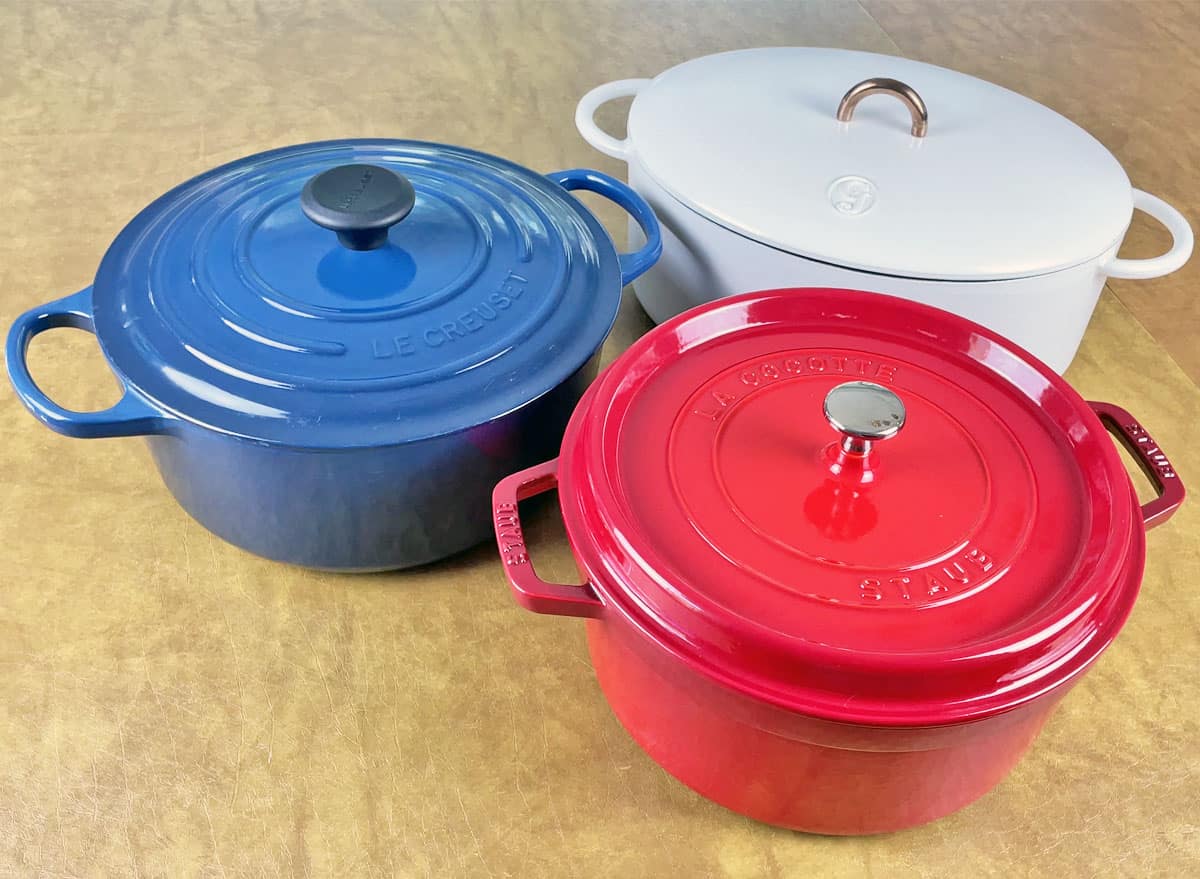
The best dutch oven for your kitchen depends entirely on how many people you feed and what you cook most often. While Le Creuset and Staub offer premium finishes, their sizing logic remains consistent across brands. Picking a pot that is too small leads to overcrowded pans and steamed food; one that is too large wastes energy and makes stirring difficult.
For 1-2 People: 3-Quart to 5.5-Quart
A 3-quart pot handles single servings of risotto or a small sauce, but a 5.5-quart round model is the versatile sweet spot for most couples. This size fits a whole chicken, a family-sized roast, or enough stew for leftovers. The Le Creuset 5.5-quart round is frequently cited as the ideal all-rounder because its diameter allows for proper searing without overcrowding.
For Families of 4+: 6-Quart to 7-Quart
If you regularly cook for four or more, or if you batch-cook meals for the week, aim for a 6-quart or 7-quart model. These larger volumes accommodate big cuts of meat and large batches of soup. Lodge’s 6-quart enamel cast iron is a popular entry point here, offering ample space without the premium price tag of French or German counterparts.
Quick Size Checklist
- Household size: 1-2 people? Stick to 3-5.5 quarts.
- Household size: 4+ people? Move to 6-7 quarts.
- Cooking style: Do you bake bread or roast whole chickens? Prioritize round shapes with adequate diameter.
- Storage: Measure your cabinet space; a 7-quart pot is significantly heavier and bulkier than a 3-quart.
Common questions about dutch ovens
What Dutch oven does America's Test Kitchen recommend?
America's Test Kitchen consistently ranks the Le Creuset 5.5-Quart Round Dutch Oven as their top pick. In their testing, the Le Creuset model excelled at both searing and stewing, offering superior heat retention and an even enamel finish that simplifies cleaning. While they acknowledge the Lodge 6-Quart Essential Enamel Cast Iron as a strong budget alternative, the Le Creuset remains their gold standard for performance and durability in a direct comparison.
Is there a better brand than Le Creuset?
For many professional chefs and serious home cooks, Staub is often considered equal to or even better than Le Creuset. Staub’s matte black interior and tight-fitting lid with self-basting spikes create a slightly more efficient moist-heat environment for braising. However, "better" depends on your priorities: choose Le Creuset for vibrant colors and ease of cleaning, or Staub for superior braising performance and ruggedness. Both brands outperform generic alternatives significantly.
Which is better, enameled or cast iron dutch oven?
Enameled cast iron, the type used by Le Creuset and Staub, is generally better for acidic dishes like tomato sauces or wine-based braises because the glass-like coating prevents metallic reactions. Bare cast iron is superior for achieving a deep, crusty sear on meats and for stovetop-to-oven versatility without worrying about chipping the enamel. If you cook a wide variety of dishes, an enameled dutch oven is the more versatile single purchase.
What is the healthiest Dutch oven to use?
Both enameled and bare cast iron are among the healthiest cookware options. Bare cast iron can actually add small amounts of dietary iron to your food, which is beneficial for many people. Enameled dutch ovens are inert and do not leach metals, making them a safe choice for those who prefer to avoid metal intake. Avoid non-stick coatings with older PFOA formulations if health is your primary concern, as enameled cast iron offers a durable, non-reactive surface.
No comments yet. Be the first to share your thoughts!